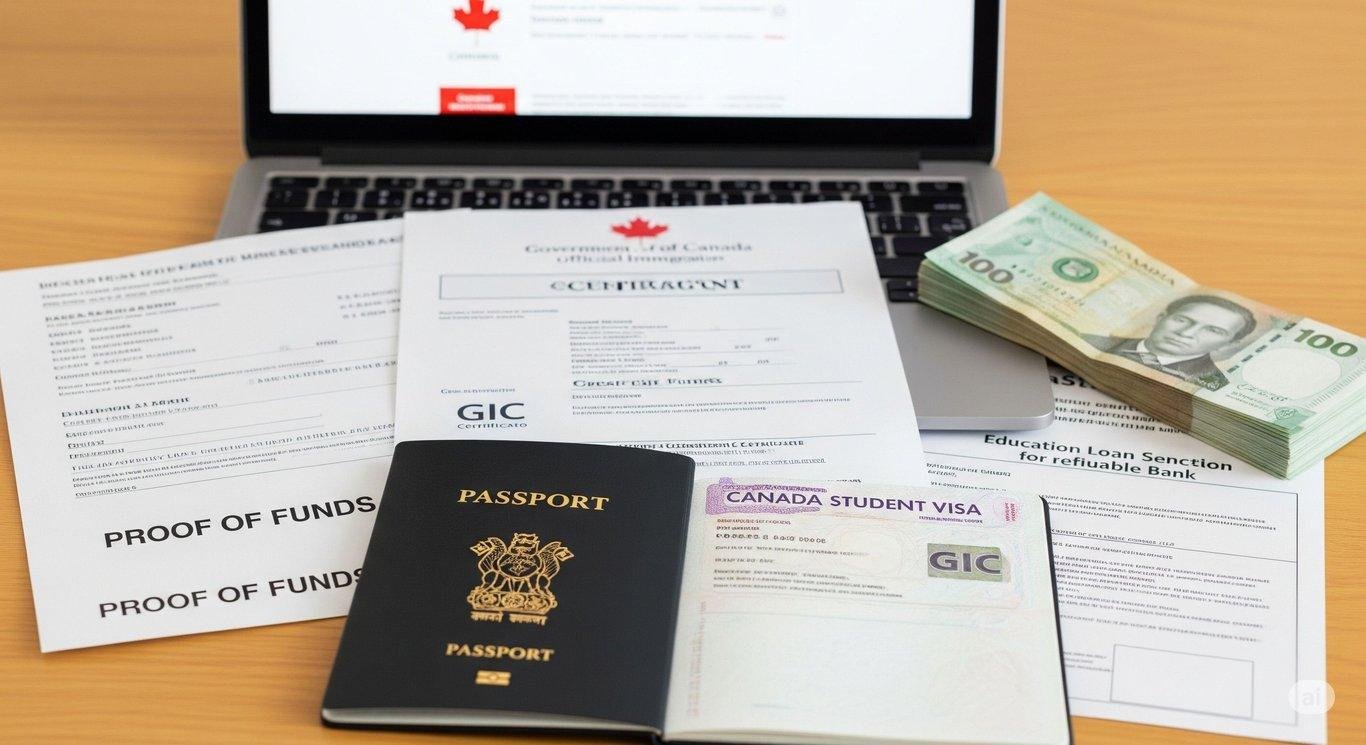
Financial Documents for Canadian Immigration: What Applicants Should Understand
Financial documents for Canadian immigration play an important role in explaining an applicant’s financial circumstances, income, savings and ability to meet the expenses associated with a proposed visit, study program, work arrangement or immigration pathway. Depending on the immigration category, Immigration, Refugees and Citizenship Canada (IRCC) may require evidence showing that the applicant has sufficient financial resources or that financial support will be provided by an eligible person or institution.
For applicants from Pakistan, preparing financial documents for Canadian immigration can involve bank statements, salary slips, employment letters, tax records, business documents, savings certificates, sponsorship letters and other financial evidence. However, the documents required are not identical for every applicant.
A bank balance alone does not necessarily explain an applicant’s financial situation. Immigration officers may consider the amount of money available, its source, the applicant’s circumstances and the requirements of the specific immigration program.
This guide explains how financial documents for Canadian immigration may be prepared, what different records can demonstrate, and what Pakistani applicants should understand before submitting their documents in 2026.
1. Why Financial Documents Matter in Canadian Immigration Applications
Financial documents can help an immigration officer understand whether an applicant has access to the resources required under the applicable program.
Depending on the application, financial evidence may help demonstrate:
- The applicant’s ability to pay travel expenses.
- The ability to support themselves during a proposed visit.
- The availability of tuition and living expenses for an international student.
- The source of funds used for an application.
- The financial capacity of a sponsor or supporting person.
- The applicant’s income and employment circumstances.
- The financial arrangements for accompanying family members.
Financial requirements differ across Canadian immigration programs.
For example, a visitor visa applicant may need to demonstrate that sufficient money is available for the proposed trip. A study permit applicant may have to demonstrate that tuition, living expenses and transportation costs can be covered. Certain permanent residence programs have their own proof-of-funds requirements.
Therefore, applicants should not assume that one bank balance or one financial document is sufficient for every application.
2. What Financial Documents for Canadian Immigration May Include
Financial documents for Canadian immigration can vary according to the applicant’s financial circumstances and immigration category.
Common types of financial evidence include:
Bank statements
Bank statements may demonstrate account balances, transactions, deposits, withdrawals and the history of an applicant’s financial activity.
Bank balance certificates
A bank certificate may confirm the account holder’s identity, account details and balance as of a particular date.
Salary slips
Salary slips can help demonstrate regular employment income and the amount received by an employee.
Employment letters
An employment letter may confirm the applicant’s position, salary, employment duration and other relevant information.
Tax documents
Tax records may help explain declared income, business activity or financial circumstances.
Business documents
Business registration, financial statements, tax records and other business evidence may help explain the financial position of a self-employed applicant.
Savings and investment documents
Certain savings or investment records may be relevant, depending on the program and whether the funds are accessible.
Sponsorship or financial support documents
If another person is providing financial support, relevant evidence may include a support letter, the sponsor’s financial records and documentation explaining the relationship and support arrangement.
Applicants should follow the specific IRCC checklist and instructions for their immigration category.
3. Bank Statements: What Applicants Should Understand
Bank statements are among the most frequently used financial documents in Canadian immigration applications.
They can help demonstrate the account balance, transaction history and financial activity over a particular period.
However, the usefulness of a bank statement depends on the circumstances of the applicant and the requirements of the application.
What should a bank statement show?
Where applicable, applicants should ensure that their statements clearly show:
- Account holder’s name.
- Bank name.
- Account details.
- Statement period.
- Account balance.
- Transactions.
- Relevant deposits and withdrawals.
If the document is incomplete or difficult to read, obtain a clearer version where possible.
How many months of bank statements are required?
There is no universal statement period that applies to every Canadian immigration application.
Some country-specific visitor visa instructions may request several months of statements, while study permit instructions or other application categories may require different evidence.
IRCC’s general study permit financial-support instructions currently identify six months of bank statements as one possible proof-of-funds document. The applicable checklist and instructions should be reviewed carefully.
Applicants should not assume that three months, six months or twelve months is universally required for every Canadian visa category.
Should the bank statement be original?
The document format depends on the application process and instructions. Many online applications accept digital copies of financial documents.
Applicants should use genuine statements issued by their financial institution and ensure that the document is complete and readable.

Do not alter account balances, transactions or bank information.
4. How Much Money Is Required for a Canadian Visa?
The amount of money required depends on the immigration category, the duration of the stay, the number of people travelling, the costs involved and the program’s financial requirements.
There is no single financial amount that guarantees approval of every Canadian visa application.
Visitor visa applicants
Visitor visa applicants should consider the expected expenses of the proposed trip.
These may include:
- Air travel.
- Accommodation.
- Food.
- Local transportation.
- Travel insurance, where applicable.
- Activities.
- Other personal expenses.
- Return transportation.
The amount needed may vary significantly between applicants.
For example, someone staying with relatives in Canada may have different accommodation expenses from someone staying in hotels throughout the visit.
The financial documents should help explain how the proposed visit will be funded.
Study permit applicants
Study permit applicants have specific financial capacity requirements.
Applicants generally must demonstrate that they can pay:
- Tuition fees.
- Living expenses for themselves.
- Living expenses for accompanying family members, where applicable.
- Transportation costs to and from Canada.
For study permit applications submitted on or after September 1, 2026, IRCC’s published living-expense requirement for applicants outside Quebec is currently CAD $23,448 for one person, excluding tuition and transportation. Different amounts apply according to the number of family members. Quebec has its own financial requirements.
These figures are subject to change. Applicants should check the official IRCC financial-support page immediately before applying.
Permanent residence applicants
Some permanent residence programs require applicants to demonstrate proof of funds.
The amount may depend on:
- The immigration program.
- Family size.
- The number of dependants.
- The applicable financial threshold.
- Whether the applicant qualifies for an exemption.
For example, certain Express Entry applicants under eligible programs must provide proof of settlement funds, while some applicants may be exempt depending on their category and circumstances.
Applicants should consult the official requirements of the particular permanent residence program.
Super Visa applicants
Super Visa applicants must meet the applicable financial requirements, including requirements relating to the host in Canada.
Financial documents may be needed to demonstrate that the relevant income requirement is met and that other program conditions are satisfied.
The applicant and host should review the current official Super Visa requirements rather than relying on outdated income figures.
5. Proof of Income: Why It Is Important
Proof of income can help explain how an applicant earns money and maintains their financial position.
For Pakistani applicants, income evidence may include:
- Salary slips.
- Employment confirmation letters.
- Bank salary deposits.
- Tax returns.
- Business income records.
- Pension documentation.
- Rental income records.
- Other relevant financial evidence.
The appropriate documents depend on whether the applicant is employed, self-employed, retired, a student or supported by another person.
Salaried applicants
Salaried applicants may consider providing relevant evidence such as:
- Employment letter.
- Salary slips.
- Bank statements showing salary deposits.
- Tax records, where applicable.
- Approved leave documentation for visitor applications, where relevant.
The documents should be consistent with the information entered in the application.
Self-employed applicants
Self-employed applicants may need to explain the nature of their business and how they generate income.
Relevant evidence may include:
- Business registration.
- Business bank statements.
- Tax records.
- Contracts.
- Invoices.
- Business financial statements.
- Evidence of ongoing business activity.
- Relevant business ownership documents.
The documents should reflect the actual business and financial circumstances.
Retired applicants
Retired applicants may provide relevant evidence such as:
- Pension records.
- Retirement certificates.
- Pension payment statements.
- Savings documents.
- Other financial records relevant to the application.
The financial evidence should explain how the applicant intends to meet the expenses of the proposed trip or application.
6. Financial Documents for Pakistani Salaried Applicants
Applicants employed in Pakistan may need to prepare a coherent set of employment and financial records.
Depending on the application, relevant documents may include:
- Employer letter.
- Salary certificate.
- Recent salary slips.
- Bank statements showing salary deposits.
- Tax documents, where applicable.
- Employment contract.
- Approved leave letter, where relevant.
What should an employment letter contain?
An employment letter may contain:
- Employee’s full name.
- Job title.
- Employer’s name.
- Employment commencement date.
- Salary.
- Employment status.
- Employer’s contact information.
- Signature of the authorized person.
For a visitor visa, an employer may also confirm approved leave and the expected date of return to work where relevant.
The letter should be genuine and issued by the employer.
Check consistency between salary and bank statements
Suppose an applicant declares a monthly salary of PKR 180,000.
If the bank statements show salary deposits that differ substantially from this amount, the discrepancy should be understood and explained where appropriate.
For example, the employer may pay part of the salary in cash, the account may receive additional income, or the salary may have changed during the relevant period.
Do not create a false explanation. The documents should reflect the actual circumstances.
7. Financial Documents for Self-Employed and Business Owners
Self-employed applicants may have financial circumstances that are different from salaried employees.
A business owner may receive income through multiple transactions, maintain separate personal and business accounts or operate a business that generates seasonal revenue.
The financial evidence should help explain the business and the applicant’s income.
Depending on the circumstances, documents may include:
- Business registration.
- Tax registration.
- Business bank statements.
- Personal bank statements.
- Financial statements.
- Invoices.
- Contracts.
- Purchase records.
- Business ownership evidence.
- Tax returns.
- Evidence of business activity.
Avoid presenting unexplained financial figures
If a business generates substantial revenue but the applicant’s personal account contains relatively modest balances, the application may need to explain the actual financial arrangement.
Business revenue is not necessarily the same as personal disposable income.
Applicants should avoid claiming that all business revenue is personally available when that is not accurate.
The financial documents should clearly and truthfully describe the applicant’s economic circumstances.
8. Bank Deposits and the Source of Funds
A bank balance does not necessarily explain how money was accumulated.
Financial documents may be more understandable when the source of significant funds can be identified through relevant supporting records.
The source of funds may include:
- Salary savings.
- Business income.
- Property sale proceeds.
- Inheritance.
- Gift.
- Family support.
- Investment proceeds.
- Pension.
- Other legitimate sources.
Why may large deposits require explanation?
A substantial deposit shortly before submitting an application may raise questions about the source and availability of the money.
For example, an applicant who normally maintains a modest balance but suddenly deposits a substantial amount may need to explain the transaction if it is relevant to the application.
Depending on the circumstances, supporting evidence may include:
- Property sale documentation.
- Gift documentation.
- Transfer records.
- Business records.
- Inheritance documentation.
- Other relevant financial evidence.
A deposit is not automatically problematic. The concern may arise when the financial records do not adequately explain the circumstances.
Applicants should not borrow money temporarily, misrepresent its ownership or create artificial transactions to make their financial position appear stronger.
The next article in this series will discuss large bank deposits in Canadian visa applications in greater detail.
9. Financial Documents When Someone Else Is Paying for Your Trip
Some Canadian immigration applicants receive financial support from a family member, spouse, friend, employer or another person.
Whether third-party financial support is accepted and what evidence is required depend on the application category.
If another person is providing support, the application may need to explain:
- Who is paying.
- The relationship between the applicant and the supporter.
- The amount or nature of support.
- Which expenses will be covered.
- The supporter’s financial capacity.
- Whether the support arrangement is genuine.
Financial support letter
A financial support letter may explain the arrangement.
Depending on the circumstances, it may include:
- Supporter’s full name.
- Applicant’s full name.
- Relationship between the parties.
- Purpose of the support.
- Expenses being covered.
- Amount or extent of financial assistance.
- Signature and date.
A support letter should not contain exaggerated or unsupported claims.
Supporting documents from the supporter
Depending on the application and instructions, relevant documents may include:
- Bank statements.
- Employment letter.
- Salary slips.
- Tax documents.
- Business records.
- Proof of identity.
- Evidence of relationship.
- Proof of the supporter’s status in Canada, where relevant.
The applicant should not assume that the supporter’s bank balance alone is sufficient.
10. Financial Documents for a Canadian Study Permit
Study permit applications involve specific financial capacity requirements.
Applicants must generally demonstrate that they have sufficient funds without relying on unauthorized employment in Canada to pay for the required costs.
These costs may include:
- Tuition.
- Living expenses.
- Transportation.
- Expenses for accompanying family members, where applicable.
IRCC’s official financial-support guidance provides examples of acceptable documents, including:
- Tuition payment receipts.
- Scholarship documentation.
- Education loan documentation.
- Bank statements.
- Canadian bank account evidence.
- Guaranteed Investment Certificates (GICs), where applicable.
- Proof of financial support from another person.
- Employment evidence from a supporter.
- Other relevant financial records.
Applicants should also explain how they intend to finance the remaining period of their studies if the program lasts longer than one year.
Parent or family financial support
If parents or another eligible supporter are financing the student’s education, the application should explain the arrangement.
Depending on the circumstances, relevant documents may include:
- Support letter.
- Parent’s bank statements.
- Parent’s employment letter.
- Salary evidence.
- Tax records.
- Business documentation.
- Relationship documentation.
Applicants should ensure that the financial evidence corresponds with the amount and source of support declared.
Scholarships and education loans
A scholarship may help demonstrate financial capacity, but the applicant should understand exactly what it covers.
For example, a scholarship that covers tuition but not living expenses or transportation may require additional financial evidence.
Similarly, an education loan should be supported by the relevant bank documentation.
Applicants should not assume that a scholarship or loan automatically satisfies every financial requirement.
11. Financial Documents for Express Entry and Permanent Residence
Some permanent residence applications require proof of funds to demonstrate the ability to settle in Canada.
The applicable financial threshold may depend on the immigration program and the size of the family.
For certain Express Entry programs, proof of funds may be required, subject to the program’s rules and exemptions.
What may be included in proof of funds?
Depending on the requirements, applicants may need official letters from banks or financial institutions.
IRCC’s proof-of-funds instructions for applicable Express Entry applicants specify information that bank letters must contain, including account information and financial details.
Applicants should read the current requirements rather than relying on a previously published amount.
Family size
The required financial amount may depend on family size under the applicable program.
Family members may need to be included in the calculation even if they are not accompanying the applicant, depending on the program rules.
Availability of funds
Applicants should check whether the required funds must be available at particular stages of the application.
Some programs require funds to be available when the application is submitted and at a later stage of processing.
Exemptions
Not every permanent residence applicant is required to provide proof of settlement funds.
Requirements and exemptions vary by program. Applicants should consult the official instructions for their immigration pathway.
12. Financial Documents for a Super Visa
A Super Visa application involves financial requirements relating to the host in Canada and other conditions specified by IRCC.
The host must generally demonstrate that the applicable minimum income requirement is met, according to the current program rules.
The host may need to provide relevant financial evidence such as:
- Employment records.
- Income documentation.
- Tax records.
- Notice of Assessment, where applicable.
- Other documents accepted under the current requirements.
The applicant and host should check the official Super Visa instructions for the current minimum income requirements and acceptable evidence.
The financial requirements should not be confused with the ordinary visitor visa requirements because a Super Visa has its own program conditions.
13. Financial Documents for a Visitor Visa
Visitor visa applicants should prepare financial evidence that helps explain the costs of the proposed trip and how those costs will be covered.
Relevant documents may include:
- Bank statements.
- Salary slips.
- Employment letters.
- Tax records.
- Business documents.
- Pension records.
- Savings documents.
- Support letters, where relevant.
How much money should a visitor visa applicant show?
There is no universal fixed bank balance required for every visitor visa applicant.
The amount may depend on:
- Length of stay.
- Accommodation arrangements.
- Travel costs.
- Planned activities.
- Number of travellers.
- Whether the applicant or another person is paying.
- The applicant’s overall circumstances.
A short visit with accommodation provided by relatives may involve different expenses from an extended visit involving hotel accommodation.
Financial evidence and the purpose of the visit
The financial documents should correspond with the proposed trip.
For example, an applicant proposing a lengthy visit should consider whether the financial evidence reasonably explains how the expenses will be covered.
Applicants should not invent a travel budget or claim that another person will pay expenses without a genuine arrangement.
14. Property Documents and Other Assets
Property ownership, investments and other assets may help explain an applicant’s financial circumstances, depending on the application.
Examples may include:
- Property ownership records.
- Rental income documents.
- Investment statements.
- Business ownership.
- Pension assets.
- Other financial records.
However, the value of an asset is not necessarily the same as money immediately available for expenses.
For example, owning a house does not automatically demonstrate that the applicant has sufficient liquid funds to pay for travel or tuition.
Similarly, a property document may be relevant to an applicant’s overall circumstances but may not replace a financial document specifically required by an immigration program.
Applicants should provide documents that are relevant to the requirements and their circumstances.
15. Common Financial Document Mistakes
Applicants should avoid the following financial documentation problems.
Submitting only a bank balance certificate
A balance certificate may show the current balance but may not provide sufficient information about the account history or source of funds if additional evidence is required.
Providing incomplete bank statements
Missing pages, unreadable scans or an incomplete statement period can make the financial records difficult to assess.
Ignoring the source of significant deposits
Substantial transactions may need to be explained where relevant.
Providing inconsistent income information
The salary, business income or other financial figures declared in the application should be consistent with the supporting records or properly explained.
Submitting altered financial records
Altering bank statements, salary slips or other financial documents is unacceptable and may have serious immigration consequences.
Assuming property is equivalent to cash
Property ownership may be relevant but does not necessarily demonstrate immediate financial capacity.
Relying entirely on a sponsor without explaining the arrangement
If another person is paying, explain the relationship, support arrangement and financial evidence where required.
Using outdated financial thresholds
Financial requirements may change. Applicants should verify the current official amounts.
Providing unnecessary financial documents
The application should be organized around the relevant requirements rather than containing excessive unrelated material.
16. How to Organize Financial Documents Before Submission
A well-organized financial-document package can help make the evidence easier to review.
Applicants may consider the following approach.
Step 1: Identify the applicable financial requirements
Read the current IRCC checklist and instructions.
Step 2: Identify your financial source
Determine whether your financial position is based on salary, business income, savings, pension, sponsorship, scholarship or another legitimate source.
Step 3: Collect relevant documents
Obtain the documents required for your application and any additional evidence that reasonably explains your circumstances.
Step 4: Check consistency
Compare the documents with your application forms and supporting letters.
Step 5: Explain unusual transactions
Where relevant, prepare an explanation supported by appropriate evidence.
Step 6: Organize the files
Use clear filenames and ensure that documents are readable.
Step 7: Check the upload requirements
Verify the file format and size limits applicable to the IRCC account.
Step 8: Conduct a final review
Ensure that the documents are complete, genuine and consistent before submitting the application.
17. Financial Document Checklist for Pakistani Applicants
The following is a general organizational checklist. It is not a universal IRCC requirement and should be adjusted to the application category.
Personal financial records
-
Bank statements for the period required or relevant to the application.
-
Bank certificate, if relevant.
-
Evidence of income.
-
Salary slips, if applicable.
-
Tax documents, if applicable.
-
Pension documents, if applicable.
-
Savings or investment records, if relevant.
Employment or business records
-
Employment letter.
-
Employment contract, if applicable.
-
Business registration, if applicable.
-
Business bank statements, if relevant.
-
Tax records.
-
Evidence of ongoing business activity.
Third-party support
-
Support letter.
-
Supporter’s bank statements, where relevant.
-
Supporter’s employment or income evidence.
-
Relationship evidence.
-
Supporter’s identification or status documentation, where relevant.
Financial consistency
-
Source of significant deposits understood.
-
Income information consistent with documents.
-
Declared funds accurately represented.
-
Relevant financial explanations prepared.
-
Documents readable and complete.
Final submission
-
Correct financial requirements identified.
-
Current IRCC instructions reviewed.
-
Financial documents uploaded to the appropriate section.
-
File formats and size checked.
-
Copies saved for personal records.
Conclusion
Financial documents for Canadian immigration can help explain an applicant’s financial circumstances, source of income, available resources and ability to meet the requirements of a particular immigration program.
For Pakistani applicants, financial evidence may include bank statements, salary slips, employment letters, business documents, tax records, savings evidence, support letters and other relevant records.
However, the appropriate documents and financial amounts depend on the immigration category. Visitor visas, study permits, Super Visas and permanent residence applications may have different financial requirements.
Applicants should focus on providing genuine, consistent and relevant financial evidence. They should also explain the source of significant funds where necessary and follow the latest official IRCC instructions.
A carefully prepared financial-document package may help present an applicant’s circumstances more clearly, but financial evidence alone does not guarantee a visa or immigration approval.
Frequently Asked Questions
1. How much money do I need for a Canadian visa from Pakistan?
There is no single amount required for every Canadian visa applicant. The financial requirement depends on the application category, proposed expenses, family size and applicable program rules.
2. How many months of bank statements are required for a Canadian visa?
The required period depends on the application and applicable instructions. Certain visitor visa instructions may request several months of statements, and IRCC’s general study permit financial guidance identifies six months of bank statements as one possible document. Applicants should check their current checklist.
3. Is a bank balance certificate enough for a Canadian visa?
Not necessarily. A bank balance certificate may confirm the current balance, but additional statements or documents may be needed to explain financial history, income and the source of funds.
4. Can my parents sponsor my Canadian study permit financially?
Financial support from parents may be used as evidence where permitted and appropriate. The applicant should provide relevant financial records and evidence explaining the support arrangement, following IRCC’s instructions.
5. Can I use property documents as proof of funds?
Property documents may help explain your financial circumstances, depending on the application. However, property ownership is not automatically equivalent to liquid funds available to pay expenses, and it may not replace documents specifically required by IRCC.
6. Do large bank deposits cause Canadian visa refusals?
A large deposit does not automatically cause refusal. However, an unexplained deposit may raise questions about the source and availability of funds. Relevant supporting evidence and a truthful explanation may help clarify the transaction.
7. Can I borrow money to show bank balance for a Canadian visa?
Applicants should not borrow money temporarily or misrepresent ownership or availability of funds to create a misleading financial picture. Financial evidence should accurately reflect the applicant’s circumstances and the applicable requirements.
8. Are financial documents compulsory for every Canadian immigration application?
Financial requirements vary. Some applications require specific proof of funds, while others may have different requirements or exemptions. Applicants should consult the instructions for their particular immigration category.
Independent Information Disclaimer
NewsGlobality.com is an independent informational blog. It is not affiliated with, endorsed by or operated by Immigration, Refugees and Citizenship Canada (IRCC), the Government of Canada, the Canada Border Services Agency (CBSA), Canadian visa offices or visa application centres.
This article is provided for general educational and informational purposes only. It does not constitute legal advice, immigration advice, professional representation or a guarantee of visa approval. Financial requirements, application procedures and immigration policies may change. Readers should consult the latest official Government of Canada instructions and consider obtaining advice from an appropriately authorized professional where necessary.
Official website: https://www.canada.ca/en/immigration-refugees-citizenship.html
1 thought on “Financial Documents for Canadian Immigration: What Applicants Should Understand (2026)”