Canada Visa Biometrics: Appointment Preparation and Common Questions for 2026
Focus Keyword: Canada visa biometrics
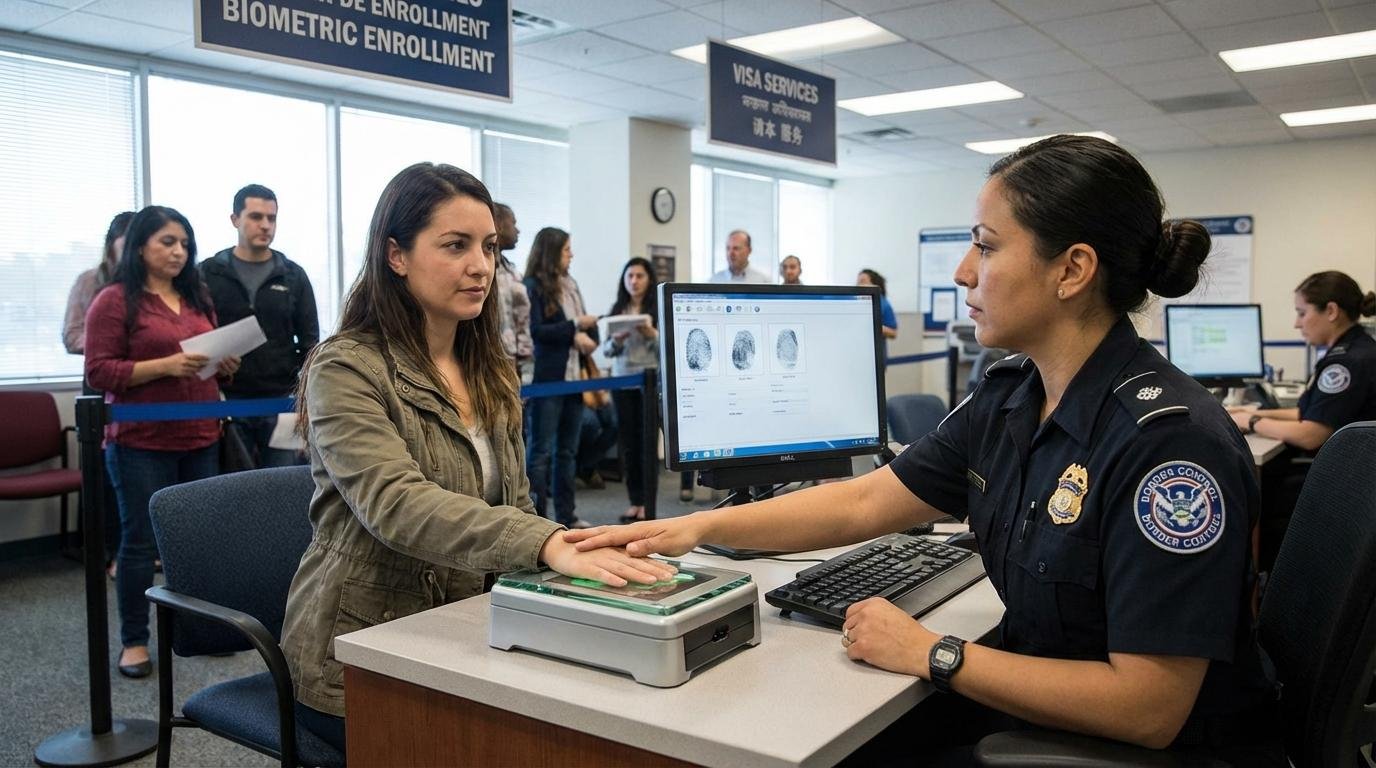
Understanding Canada visa biometrics is an important part of preparing a Canadian immigration application. Many applicants for visitor visas, study permits and work permits must provide fingerprints and a digital photograph unless they qualify for an exemption. The biometric process helps Canadian immigration authorities establish and verify an applicant’s identity.
For applicants in Pakistan, biometrics are generally collected at designated Canada Visa Application Centres (VACs). Applicants who receive a Biometric Instruction Letter (BIL) should follow the instructions in that letter, arrange an appointment and attend the designated centre within the stated deadline.
This guide explains who needs to provide biometrics, how the appointment process works, what documents to bring, the applicable government fees, how long biometrics remain valid and what Pakistani applicants should know before visiting a VAC.
1. What Are Canada Visa Biometrics?

Canada visa biometrics are personal identification details collected through fingerprints and a digital photograph.
The process generally involves:
- Scanning fingerprints from all ten fingers.
- Capturing a digital photograph of the applicant.
- Associating the biometric information with the applicant’s immigration application.
Canadian immigration authorities use biometric information as part of identity verification and immigration screening.
Biometrics are not an interview and do not replace the application forms, supporting documents or other immigration requirements.
The collection process is generally brief, but applicants should allow sufficient time for registration, security procedures and any additional administrative steps at the centre.
2. Who Needs to Give Biometrics for a Canada Visa?
Whether an applicant must provide biometrics depends on their application category, age, immigration history and applicable exemptions.
Many applicants applying for the following temporary-residence documents must provide biometrics unless exempt:
- Visitor visa.
- Study permit.
- Work permit.
- Certain extensions or other temporary-residence applications.
Permanent residence applicants who are required to provide biometrics generally receive instructions as part of their application process.
Some applicants are exempt from biometric collection.
Common biometric exemptions
According to IRCC’s published guidance, exemptions include certain categories such as:
- Children under 14 years of age.
- Applicants over 79 years of age, except asylum claimants.
- Canadian citizens.
- Existing Canadian permanent residents.
- Applicants visiting Canada who only require an electronic travel authorization (eTA).
- Certain diplomatic or official visa applicants.
- Some applicants who have already provided biometrics for a permanent residence application that is still being processed and are applying for a temporary resident visa, study permit or work permit.
These are examples, not an exhaustive list of every possible exemption. Applicants should check the official IRCC eligibility guidance for their specific circumstances.
3. What Is a Biometric Instruction Letter (BIL)?
A Biometric Instruction Letter, commonly called a BIL, is an official notification issued by IRCC when an applicant needs to provide biometrics.
The letter confirms that biometric information is required and provides instructions for completing the process.
It generally explains:
- That the applicant must provide biometrics.
- The deadline for biometric collection.
- How to arrange an appointment.
- Where the applicant can provide fingerprints and a photograph.
- Other instructions relevant to the application.
Applicants should read the entire letter carefully.
A BIL is not a visa approval letter. Receiving it does not mean that IRCC has approved the application.
Why is the BIL important?
The BIL connects the biometric collection process to the relevant application.
Applicants should use the BIL issued for their current application rather than relying on an old letter from a previous application.
Using an outdated BIL may cause processing problems or delays.

4. How to Complete the Canada Visa Biometrics Process
The general process involves several stages.
Step 1: Submit your Canadian visa application
Begin by selecting the appropriate immigration category and completing the relevant application.
For example, a person visiting Canada may apply for a visitor visa, while an eligible international student may apply for a study permit.
Complete the application forms and provide the required supporting documents.
Step 2: Pay the applicable biometric fee
If biometrics are required, applicants generally need to pay the biometric fee when submitting their application.
Paying the required fee at the correct stage can help avoid unnecessary delays.
Step 3: Receive the Biometric Instruction Letter
After IRCC receives and processes the relevant application and fee, it may issue a BIL through the applicant’s account or through the applicable communication method.
Check your account and email notifications regularly.
Step 4: Book an appointment
Once you receive the BIL, arrange an appointment at an authorized biometric collection location.
For applicants in Pakistan, Canada Visa Application Centres operate in Islamabad, Karachi and Lahore.
Appointments should be arranged through the official VFS Canada appointment system.
Step 5: Attend the appointment
Visit the selected centre with the required documents.
The biometric collection process generally includes identity verification, fingerprint scanning and digital photography.
Step 6: Wait for further IRCC instructions
After biometric collection, the information is transmitted through the official process to IRCC.
Continue monitoring your application account for requests, updates or additional instructions.
Providing biometrics does not mean that the visa or permit has been approved.
5. How Much Is the Canada Visa Biometrics Fee in 2026?
IRCC’s published biometric fee schedule lists the following amounts:
| Applicant category | Government biometric fee |
|---|---|
| Individual applicant | CAD $85 |
| Eligible family members applying together | Maximum CAD $170 |
| Groups of 3 or more eligible performing artists and staff applying together | Maximum CAD $255 |
| Transit visa applicants | No biometric fee |
The family maximum applies to eligible family members applying at the same time, subject to IRCC’s rules.
The biometric fee is separate from other applicable application fees.
Applicants should check the official IRCC fee page before paying because fees and eligibility rules may change.
Is the biometric appointment free?
Yes. Booking a biometric appointment at a VAC is free.
Applicants should not pay an unofficial person or agent to obtain an appointment.
A VAC may offer additional optional services for separate charges. These should not be confused with the government biometric fee or the free appointment booking process.
6. How Long Are Canada Visa Biometrics Valid?
For temporary-residence applications, biometrics are generally valid for 10 years.
If an applicant has already provided biometrics within the previous 10 years, IRCC may automatically attach the existing biometric information to a new visitor visa, study permit or work permit application.
This means the applicant generally does not need to provide fingerprints and a photograph again for every temporary-residence application while the biometrics remain valid.
However, there are important details.
Biometrics validity and visa validity are different
A visa or permit cannot be issued beyond the expiry date of the applicant’s biometrics.
For example, if an applicant’s biometrics are due to expire sooner than the period they are requesting, the validity of the biometric record may affect the period for which the immigration document can be issued.
IRCC allows eligible temporary-residence applicants to provide biometrics again in certain circumstances, even if their existing biometrics remain valid.
Permanent residence applicants
Permanent residence applicants should not assume that the temporary-residence 10-year rule applies in the same way.
IRCC’s permanent-residence biometric instructions are separate. Applicants should follow the instructions issued for each permanent residence application.
7. How to Check Whether Your Biometrics Are Still Valid
Applicants who have previously provided fingerprints and a photograph may be uncertain whether they need to attend another appointment.
IRCC provides an online biometric status-checking tool.
To check your biometric validity:
- Visit the official IRCC biometric status page.
- Open the biometric status-checking tool.
- Enter the requested identification information.
- Follow the instructions to check the validity and expiry date.
Applicants should not rely exclusively on old appointment receipts or memory of a previous biometric visit.
If IRCC issues a new BIL for the current application, read it carefully and follow the instructions provided.
8. Where Can Pakistani Applicants Give Canada Visa Biometrics?
Applicants in Pakistan can provide biometrics at designated Canada Visa Application Centres.
The current VFS Canada Pakistan network lists centres in the following cities:
Islamabad
The Islamabad Canada Visa Application Centre is located in the Chak Shahzad area.
Applicants should check the official VFS page for the current address, appointment instructions, opening hours and access requirements.
Karachi
Applicants residing in Sindh and nearby areas may consider the Karachi centre, subject to appointment availability and the current service arrangements.
Lahore
Applicants in Punjab and surrounding areas may use the Lahore centre, subject to the current appointment system.
The availability of appointment slots and centre services may change. Applicants should verify details directly before travelling.
9. What Documents Should You Bring to Your Biometrics Appointment in Pakistan?
Applicants should follow the instructions in their BIL and the latest VFS Pakistan guidance.
For an online application, the usual documents requested for a biometric appointment include:
- Printed Biometric Instruction Letter.
- Valid passport or travel document.
- Completed VFS consent form, where required.
- Appointment confirmation.
- Other documents specifically requested in the appointment instructions.
VFS Pakistan’s current centre guidance also lists additional document requirements for certain appointment circumstances, including printed application documents, barcode sheets, passport biodata-page copies and supporting documents.
Because requirements can depend on the application and service being used, applicants should check the official VFS instructions before attending.
Why should you bring your original passport?
The passport is an important identity document.
The centre uses it to verify the applicant’s identity and associate the biometric information with the correct application.
The passport details should be consistent with the information in the application and BIL.
10. How to Prepare Before Visiting the Visa Application Centre
Proper preparation can help applicants avoid unnecessary inconvenience.
Review your appointment confirmation
Check the appointment date, time and location.
Make sure you have selected the correct centre and that the appointment is associated with your application.
Check your passport
Ensure that you bring the passport or travel document specified in the instructions.
Do not assume that a photocopy can replace the original document.
Print the required documents
Keep your BIL and appointment confirmation accessible.
If VFS requests a consent form or other paperwork, complete it according to the instructions.
Arrive early
VFS Pakistan advises applicants to aim to arrive approximately 15 minutes before the scheduled appointment.
Allow additional time for traffic, security checks and travel arrangements.
Review photograph requirements
Your face must be clearly visible during digital photography.
Avoid sunglasses and tinted glasses. Ordinary glasses may be permitted if your eyes remain visible and there is no glare.
Daily religious or medically required head coverings may be worn, provided the face remains clearly visible and the covering does not create shadows.
Keep your fingertips ready
IRCC advises that hands should be free from henna and temporary finger injuries should be healed before biometric collection.
Applicants with cuts, cracks or other temporary finger injuries may need to wait until their fingerprints can be collected properly.
11. What Happens During a Canada Visa Biometrics Appointment?
The process is generally straightforward.
When you arrive at the centre, staff will guide you through the applicable registration and identity-verification procedures.
The process may involve:
- Checking your appointment information.
- Reviewing your passport and BIL.
- Confirming your identity.
- Scanning your fingerprints.
- Capturing a digital photograph.
- Completing the biometric enrolment process.
At the Pakistan VACs, VFS describes the process as including a scan of all ten fingers and a digital photograph.
Applicants should follow staff instructions and cooperate with the collection process.
The biometric appointment is not ordinarily an immigration interview. It does not replace the assessment of your application by IRCC.
12. Can You Wear a Headscarf, Hijab or Glasses During Biometrics?
Applicants may wear daily religious or medically required head coverings during biometric photography.
However, the full face must remain clearly visible, and the covering should not create shadows over facial features.
For glasses:
- Ordinary glasses may be worn if the eyes remain clearly visible.
- There should be no glare on the lenses.
- Sunglasses are not permitted.
- Tinted glasses are not permitted, including tinted prescription glasses.
Applicants should follow the photograph instructions published by IRCC and the VAC.
13. What Happens If Your Fingerprints Cannot Be Captured Properly?
In some situations, a fingerprint scanner may not capture sufficiently clear images.
Possible reasons include:
- Cuts or injuries.
- Cracked fingertips.
- Temporary skin conditions.
- Henna or other temporary decoration.
- Poor-quality fingerprint scans.
IRCC explains that applicants may need to provide biometrics again if high-quality fingerprints cannot be obtained.
If you have a temporary injury, review the official instructions before attending the appointment.
Do not conceal an injury or attempt to alter your fingerprints.
14. What If You Cannot Attend Within the 30-Day BIL Deadline?
IRCC generally gives applicants 30 days from the date they receive the BIL to provide biometrics.
If you cannot attend within this period, you should contact IRCC through the appropriate web form before the letter expires.
Explain why you need more time.
For example, if you could not obtain an appointment before the deadline, IRCC advises you to provide:
- The date of your available appointment.
- A screenshot of the appointment confirmation.
- An explanation of the circumstances.
Do not simply ignore the deadline.
If your circumstances prevent you from attending, provide the information and evidence requested through the official process.
15. Can You Change or Reschedule Your Biometrics Appointment?
If you need to change your appointment, use the official VFS appointment system and follow its current instructions.
The VFS appointment platform provides options for scheduling, rescheduling and cancelling appointments.
Before changing an appointment, consider the deadline shown in your BIL.
If a new appointment is later than the BIL deadline, contact IRCC through the web form and explain the situation. Include relevant evidence where appropriate.
Do not assume that rescheduling automatically extends the IRCC deadline.
16. Does Giving Biometrics Mean Your Canada Visa Is Approved?
No.
Biometric collection is one stage of the immigration application process.
IRCC may still need to assess:
- Eligibility requirements.
- Financial circumstances.
- Purpose of travel or study.
- Supporting documents.
- Family and employment circumstances.
- Admissibility requirements.
- Other information relevant to the application.
A completed biometric appointment does not guarantee approval.
Applicants should continue checking their IRCC account for additional requests and decisions.
17. Common Mistakes Applicants Should Avoid
Mistake 1: Missing the BIL deadline
Applicants should not delay arranging an appointment after receiving their biometric instruction letter.
Mistake 2: Using an old BIL
Always follow the instructions associated with the current application.
Mistake 3: Arriving without the original passport
The passport is generally required for identity verification.
Mistake 4: Paying someone for a free appointment
IRCC states that biometric appointments at VACs are free to book. Applicants should use official appointment channels.
Mistake 5: Wearing sunglasses during biometric photography
Sunglasses and tinted glasses are not permitted for the photograph.
Mistake 6: Applying henna before the appointment
Henna on the fingertips may interfere with fingerprint scanning.
Mistake 7: Assuming biometrics guarantee approval
Biometrics do not determine the final outcome of the visa or permit application.
Mistake 8: Ignoring the difference between temporary and permanent residence rules
The biometric validity rules for temporary residence and permanent residence should not be treated as identical.
18. Final Canada Visa Biometrics Appointment Checklist
Before attending your appointment, review the following:
-
I have received the correct BIL for my current application.
-
I have checked the deadline in the letter.
-
I have booked an appointment through the official system.
-
I have printed my BIL.
-
I have my valid passport or travel document.
-
I have my appointment confirmation.
-
I have completed the required consent form, where applicable.
-
I have checked the latest VFS document instructions.
-
My fingertips are free from henna.
-
I do not have temporary finger injuries that could prevent proper scanning.
-
My face will be clearly visible in the photograph.
-
I have checked the centre address and travel arrangements.
-
I have retained copies of relevant appointment documents.
Conclusion
Canada visa biometrics are an important identity-verification stage for many Canadian immigration applications. Applicants who receive a Biometric Instruction Letter should read it carefully, book an appointment through an official channel and attend the designated collection centre with the required documents.
For Pakistani applicants, Canada Visa Application Centres are available in Islamabad, Karachi and Lahore. Preparing the passport, BIL, appointment confirmation and other required documents in advance can help make the visit more straightforward.
Applicants should also understand that biometric validity, fees, exemptions and appointment deadlines depend on their individual circumstances and application category.
Most importantly, providing fingerprints and a photograph does not guarantee visa approval. Applicants should continue to follow IRCC instructions and monitor their application until a final decision is issued.
Frequently Asked Questions (FAQs)
1. How much is the Canada visa biometrics fee in 2026?
IRCC lists the individual biometric fee as CAD $85. Eligible families applying together may pay a maximum total of CAD $170. Other categories have separate rules and applicants should check the current official fee schedule.
2. How long are Canada visa biometrics valid?
For temporary-residence applications, biometrics are generally valid for 10 years. Applicants should check their status through IRCC’s official tool. Permanent residence applicants should follow the separate instructions for their application category.
3. How many days do I have to give biometrics after receiving a BIL?
IRCC generally gives applicants 30 days from the date they receive their Biometric Instruction Letter. The applicant should follow the exact instructions in the letter.
4. Where can I give Canada visa biometrics in Pakistan?
Designated Canada Visa Application Centres are listed in Islamabad, Karachi and Lahore. Applicants should check the official IRCC VAC directory and VFS Pakistan website for current arrangements.
5. Is a Canada visa biometrics appointment free?
Yes. Booking a biometric appointment at a VAC is free. Optional additional VAC services may carry separate charges.
6. Can I give biometrics without a Biometric Instruction Letter?
Applicants should follow IRCC’s instructions. For most online applications, the BIL is required to arrange and attend the appointment. Do not use a BIL from an old application.
7. Do children need to give biometrics for a Canada visa?
Children under 14 are generally exempt from biometric collection. Applicants should check the current IRCC age rules and application-specific instructions.
8. Can I wear a hijab during Canada visa biometrics?
Daily religious or medically required head coverings are permitted, provided the full face remains clearly visible and the covering does not create shadows.
9. What happens after I give my biometrics?
The biometric information is transmitted through the official process to IRCC. The department continues assessing the application and may request additional documents or take other steps before making a decision.
10. Does a biometric appointment mean my Canadian visa will be approved?
No. Biometrics are only one part of the application process. IRCC makes the final decision after assessing the applicable requirements and evidence.
Independent Information Disclaimer
NewsGlobality.com is an independent informational blog and is not affiliated with Immigration, Refugees and Citizenship Canada (IRCC), the Government of Canada, Canadian embassies, consulates, visa offices or visa application centres. This article is provided for general educational and informational purposes only. It does not constitute legal advice, immigration advice or a guarantee of visa approval. Immigration policies, biometric fees, appointment arrangements and application requirements may change. Readers should verify the latest information through official Canadian government resources and the authorized Visa Application Centre before taking action.
1 thought on “Canada Visa Biometrics: Appointment Preparation and FAQs (2026)”