Canada Super Visa Reapplication 2026 Step-by-Step Guide
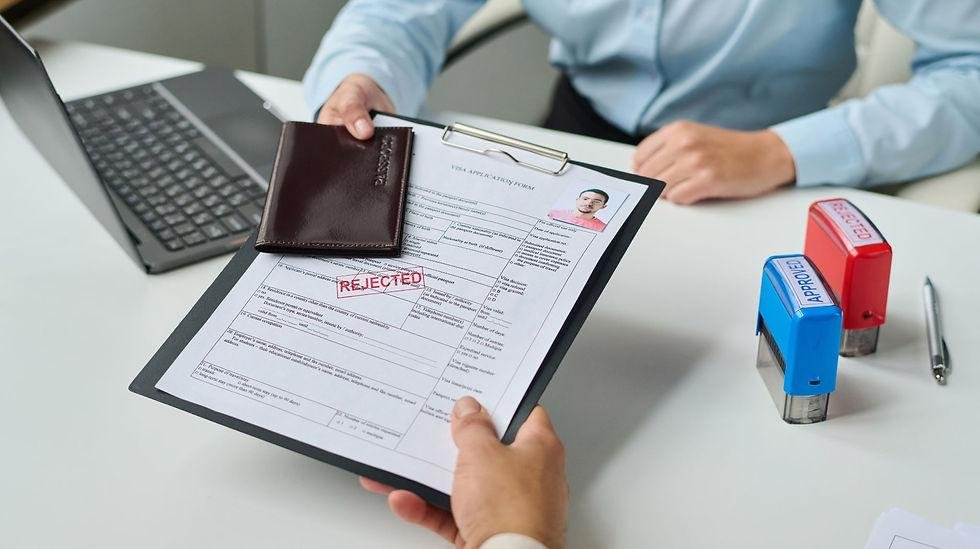
Canada Super Visa reapplication 2026 is an important subject for Pakistani parents and grandparents whose previous applications were refused by Immigration, Refugees and Citizenship Canada (IRCC). A refusal can be disappointing for families who have made arrangements to visit their children and grandchildren in Canada. However, a refusal does not automatically mean that an applicant can never receive a Super Visa.
The appropriate next step depends on the reasons for refusal, the applicant’s circumstances and whether new or stronger evidence is available. Some applicants may benefit from submitting a fresh application, while others may need to investigate a possible administrative error or seek professional legal advice.
The most important principle is to avoid submitting an identical application without addressing the concerns identified by the immigration officer. IRCC explains that applying again with the same information will likely not change the outcome.
This guide explains how Pakistani parents can examine a refusal, prepare supporting documents, improve their application and understand the available options in 2026. It is provided for general educational purposes and does not replace advice from an authorized Canadian immigration professional.

1. Can Pakistani Parents Apply Again After a Canada Super Visa Refusal?
Yes. Pakistani parents and grandparents may generally submit another Super Visa application after a refusal, provided they continue to meet the applicable eligibility and admissibility requirements.
There is no general requirement to wait a fixed number of months before submitting a new temporary-resident application. Nevertheless, applying again immediately with the same evidence may result in another refusal.
A new application should demonstrate that the concerns raised in the earlier decision have been properly addressed. For example, an applicant who previously failed to establish sufficient financial support may need to provide clearer evidence of the host’s income, household size and ability to support the visit.
Similarly, if the officer was not satisfied that the applicant would leave Canada at the end of the authorized stay, the applicant may need to provide more persuasive evidence of family, residential, financial or other ties to Pakistan.
The decision to apply again should therefore be based on a careful review rather than simply on the passage of time.
2. Understand Why the Previous Application Was Refused
Before starting a second application, applicants should identify the precise reasons for the previous refusal.
The refusal letter should be read carefully. Applicants should also examine any officer decision notes supplied with the refusal. These notes can provide additional information about the officer’s assessment.
Since 29 July 2025, IRCC has provided officer decision notes with refusal letters for most temporary-resident applications, including visitor visas and Super Visas. The notes are intended to explain the officer’s reasoning.
Common areas of concern may include:
- Whether the applicant will leave Canada at the end of the authorized stay.
- Whether the applicant has sufficient financial support.
- Whether the Canadian host meets the applicable Super Visa income requirement.
- Whether the relationship between the applicant and the Canadian host has been established.
- Whether the proposed visit is credible and adequately explained.
- Whether the applicant has provided the required medical insurance evidence.
- Whether the submitted forms and supporting documents are complete and consistent.
- Whether there are medical, criminal or other admissibility concerns.
A refusal can involve more than one issue. Applicants should not assume that correcting a single document will resolve every concern.
3. Step 1: Read the Refusal Letter Carefully
The first practical step in a Canada Super Visa reapplication is to examine the refusal letter and identify every concern mentioned by IRCC.
Applicants should make a written list of the refusal reasons. This helps prevent important issues from being overlooked during preparation of the new application.
For example, if the refusal indicates concerns about the applicant’s purpose of travel and financial circumstances, both matters should be addressed. Providing additional bank statements alone may not resolve concerns about the purpose of the visit.
The applicant should record:
- The date the refusal was issued or communicated.
- The application number and applicant details.
- Every refusal reason mentioned in the letter.
- Any additional explanation contained in the officer decision notes.
- Documents or information that could respond to each concern.
Applicants should retain a complete copy of the previous application and the documents submitted with it. Comparing the old application with the proposed new application can help identify missing information, inconsistencies and outdated evidence.
4. Step 2: Examine the Officer Decision Notes
Officer decision notes are particularly useful because they may explain the reasoning behind a refusal in more detail than the refusal letter.
For example, a letter may refer generally to concerns about an applicant’s intention to leave Canada. The officer’s notes may explain which aspects of the applicant’s circumstances were considered insufficient.
Applicants should review the notes carefully and identify the factual concerns that need to be addressed.
Questions to consider include:
- Did the officer identify insufficient evidence of family ties in Pakistan?
- Was the applicant’s financial situation unclear?
- Were the host’s income documents incomplete?
- Did the officer question the length or purpose of the proposed visit?
- Was a submitted document missing, unclear or inconsistent?
- Did the officer identify a medical or admissibility issue?
If decision notes were not supplied, applicants should consult IRCC’s official information about refusal explanations and the available information-request procedures. Access to personal immigration information may be possible through the applicable Privacy Act or Access to Information process, depending on the applicant’s circumstances and eligibility.
An applicant should not assume that requesting additional notes will automatically suspend any legal deadline. Anyone considering judicial review should obtain legal advice promptly.
5. Step 3: Prepare a Clear Response to Every Refusal Reason
A strong second application should not merely contain more pages. It should contain relevant evidence that directly responds to the concerns in the previous decision.
Applicants can prepare a simple response plan before uploading documents.
For example:
| Previous concern | Possible response evidence |
|---|---|
| Insufficient evidence of ties to Pakistan | Property records, family circumstances, employment or pension evidence, where applicable |
| Unclear purpose of visit | Detailed invitation letter and realistic visit plan |
| Financial support not established | Updated income documents, tax records and financial evidence |
| Relationship with Canadian host not established | Birth certificates and other relevant family records |
| Incomplete insurance evidence | Updated policy documents meeting current Super Visa requirements |
| Inconsistent application information | Corrected forms and an explanation of genuine discrepancies |
These examples are not a guarantee that IRCC will accept a particular document. The relevance and reliability of evidence depend on the applicant’s individual circumstances.
A new explanation letter can help organize the evidence. It should be factual, concise and consistent with the application forms. Applicants should avoid emotional arguments, unsupported claims or statements that cannot be verified.
6. Step 4: Strengthen the Evidence of Ties to Pakistan
One important issue in temporary-resident applications is whether the applicant will leave Canada at the end of the authorized stay.
Pakistani parents should provide genuine evidence of their circumstances in Pakistan. The appropriate documents will vary according to age, employment status, family situation and financial position.
Potential supporting evidence may include:
- Property ownership or relevant residential documents.
- Pension statements or retirement records.
- Evidence of continuing employment or business activity, where applicable.
- Information about close family members who remain in Pakistan.
- Evidence of financial assets or ongoing responsibilities.
- Documents explaining any significant family or personal commitments.
Applicants should not obtain documents merely to create an appearance of stronger ties. All evidence must be genuine and accurately reflect the applicant’s circumstances.
For retired parents, employment evidence may not be relevant. In such cases, other genuine circumstances may help explain their connection to Pakistan.
It is also important to remember that owning property or having family members in Pakistan does not automatically establish that an applicant will leave Canada. IRCC assesses the overall circumstances of each application.
7. Step 5: Improve the Invitation Letter from the Canadian Child
The invitation letter is an important part of a Super Visa application because it explains the proposed visit and the Canadian host’s arrangements for the visiting parent or grandparent.
After a refusal, the Canadian child should review the earlier invitation letter and correct any missing or unclear information.
A revised invitation letter should generally explain:
- The host’s full name and residential address in Canada.
- The host’s immigration status in Canada.
- The relationship between the host and the visiting parent or grandparent.
- The reason for inviting the family member.
- The intended duration and general purpose of the visit.
- Where the parent or grandparent will stay.
- How expenses will be managed.
- The host’s household composition and relevant income information.
The letter should be consistent with the application forms and supporting documents.
For example, if the invitation letter states that the parent will visit for a particular period, the proposed travel arrangements and supporting explanation should not suggest a substantially different plan without clarification.
A longer invitation letter is not necessarily a stronger one. Clear, accurate and verifiable information is more useful than unnecessary statements.
8. Step 6: Review the Canadian Host’s Income and Financial Documents
The Canadian child or grandchild who invites the applicant must satisfy the applicable Super Visa income requirement.
After a refusal involving financial support, the host should carefully review the household-size calculation and the relevant income evidence.
The host may need to examine:
- The number of people included in the applicable family-size calculation.
- The income threshold that applies to that household size.
- The relevant tax-year documents and other accepted evidence.
- Whether a co-signer is eligible and properly documented, where applicable.
- Whether the documents are current, complete and consistent.
Applicants should consult the current IRCC Super Visa eligibility instructions rather than relying on old income figures copied from an earlier article or an unofficial website.
Where a previous application contained an incorrect household-size calculation, the new application should correct it and provide an understandable explanation.
A bank balance by itself may not establish that the host meets the required income test. Applicants should provide the documents that IRCC currently requires or accepts for demonstrating the host’s income.
9. Step 7: Check the Super Visa Medical Insurance
Medical insurance is a significant Super Visa requirement. Applicants should review the policy documents carefully before submitting a new application.
The insurance evidence should meet the requirements in force when the new application is submitted. Applicants should verify the required coverage amount, policy duration, covered services and insurer eligibility directly through IRCC.
A policy that was suitable for an earlier application may have expired or may no longer reflect the applicant’s proposed travel dates.
Before reapplying, check:
- Whether the policy meets the minimum required coverage.
- Whether it covers healthcare, hospitalization and repatriation as required.
- Whether the policy meets the minimum validity period.
- Whether the insurer meets IRCC’s Canadian or eligible foreign-insurer conditions.
- Whether the policy identifies the correct applicant.
- Whether the payment evidence and policy documents are available.
Applicants should not assume that every overseas insurance policy qualifies. The insurer and policy must meet IRCC’s published conditions.
If the earlier refusal involved insurance, the new submission should make it easy for the officer to identify the insurer, coverage, policy period and relevant payment information.
10. Step 8: Correct Errors and Inconsistencies in the Forms
Errors in forms and supporting documents can undermine an application, particularly when the new submission repeats information from a previous application without checking it.
Before reapplying, compare the old and new forms carefully.
Check:
- Names and dates of birth.
- Passport numbers and expiry dates.
- Residential and mailing addresses.
- Employment and retirement history.
- Previous travel history.
- Family information.
- Previous visa refusals.
- Proposed travel dates and visit duration.
- Information about the Canadian host.
Applicants must answer questions about previous refusals truthfully. A previous Canadian visa refusal should not be concealed in a later application.
If a previous application contained an honest mistake, provide accurate corrected information and explain the discrepancy where necessary. Never alter documents or provide false information to make the new application appear stronger.
Misrepresentation can create serious immigration consequences.
11. Step 9: Prepare a New Application Package
Once the refusal reasons have been reviewed and the evidence has been updated, applicants can organize the new application.
A well-arranged application package can make it easier to understand the applicant’s circumstances and the documents supporting the request.
A possible organization is:
Section A — Application forms and identity
- Required application forms.
- Valid passport and relevant identity documents.
- Photographs and other items required by the current application instructions.
Section B — Family relationship
- Birth certificates or other documents establishing the parent-child relationship.
- Relevant family records, where required.
Section C — Canadian host
- Invitation letter.
- Proof of the host’s status in Canada.
- Household and income evidence.
- Relevant supporting financial documents.
Section D — Applicant’s circumstances in Pakistan
- Financial records.
- Property or residential evidence, where applicable.
- Pension, employment or business records, where relevant.
- Other genuine evidence of ties to Pakistan.
Section E — Super Visa requirements
- Medical insurance documents.
- Medical examination information, if required.
- Any additional documents requested by IRCC.
Section F — Previous refusal response
- Previous refusal letter.
- Officer decision notes, where available.
- A concise explanation addressing each refusal concern.
- New or updated supporting evidence.
This is an organizational example, not a substitute for the official document checklist. Applicants should follow the current IRCC instructions for their own circumstances and application location.
12. Step 10: Submit the New Application Through the Official Process
After completing the documents, applicants should use the official IRCC application process applicable to their circumstances.
Before submission, confirm that:
- The forms are complete.
- All required supporting documents are included.
- The information is consistent across the application.
- Translations meet IRCC requirements where applicable.
- The required fees have been paid.
- The documents are readable and uploaded in the correct categories.
- The new application addresses the earlier refusal reasons.
Applicants should keep copies of the submitted forms, supporting evidence, payment confirmation and application number.
Processing times can change. Applicants should use IRCC’s official processing-time information rather than relying on estimates from social media posts or unofficial websites.
Submitting a second application does not guarantee that it will be approved. The officer will assess the new application based on the evidence and applicable requirements.
13. Should Applicants Request Reconsideration Instead of Reapplying?
Reconsideration and reapplication are different options.
A reconsideration request asks the office that made the decision to review its earlier decision. It may be worth exploring where there is a specific and credible reason to believe that an important matter was overlooked or that an administrative error occurred.
For example, a request might explain that a document was submitted before the decision but appears not to have been considered. The applicant should identify the relevant document and provide a clear explanation.
However, reconsideration is not a formal appeal process. IRCC does not have to reopen the application simply because the applicant disagrees with the decision.
A request that only repeats the applicant’s original arguments may not be persuasive.
Applicants should also understand that asking for reconsideration does not automatically stop or extend the deadline for seeking judicial review. Anyone who may have grounds to challenge a decision should obtain legal advice without delay.
14. When Is Federal Court Judicial Review Relevant?
Judicial review is a legal process through which the Federal Court may examine whether an immigration decision was made lawfully and fairly.
It is not the same as submitting a new Super Visa application. The Court does not simply decide whether it would have approved the visa itself.
A person seeking judicial review of an immigration decision generally needs to apply for leave first. The Federal Court’s published guidance identifies deadlines of:
- 15 days for a matter arising in Canada.
- 60 days for a matter arising outside Canada.
The deadline is generally calculated from the date the applicant is notified of, or becomes aware of, the decision. The precise circumstances should be checked with a qualified legal professional.
For a Pakistani applicant whose matter arose outside Canada, the 60-day period may be relevant. Do not assume that the deadline can be ignored because a reconsideration request has been submitted.
Judicial review involves legal procedure and strict filing requirements. Applicants should promptly consult a Canadian immigration lawyer if they believe the decision involved an error of law, procedural unfairness or another reviewable issue.
A successful judicial review may result in the matter being sent back for reconsideration. It does not mean that a Super Visa is automatically granted.
15. Common Mistakes to Avoid During a Second Super Visa Application
Applicants should avoid the following mistakes:
1. Resubmitting the same application
Sending substantially the same documents without responding to the refusal concerns may lead to another refusal.
2. Ignoring the officer decision notes
The notes may contain useful details that are not obvious from the refusal letter alone.
3. Providing unsupported financial claims
Income and financial statements should be supported by genuine documents.
4. Using an unclear invitation letter
The purpose, duration and arrangements for the visit should be explained accurately.
5. Providing inconsistent information
Differences between forms, letters and supporting evidence should be corrected and explained.
6. Purchasing unsuitable medical insurance
Applicants should verify that the insurer and policy satisfy the current IRCC requirements.
7. Concealing previous refusals
All questions about immigration history should be answered truthfully.
8. Believing that a representative guarantees approval
Hiring an immigration consultant or lawyer does not guarantee a positive decision. A representative cannot promise that IRCC will approve an application.
9. Missing legal deadlines
Applicants considering judicial review should not delay while waiting for an informal response to a reconsideration request.
16. Final Checklist Before Submitting a New Application
Before submitting a Canada Super Visa reapplication, Pakistani parents and their Canadian hosts should review the following points:
-
The previous refusal letter has been reviewed.
-
Officer decision notes have been examined, if supplied.
-
Every refusal concern has been identified.
-
The new application responds to each relevant concern.
-
The applicant’s personal and family information is accurate.
-
The Canadian host’s status and relationship evidence are included.
-
The host’s household size and income evidence have been checked.
-
Medical insurance meets the current IRCC requirements.
-
The invitation letter is complete and consistent.
-
Documents from Pakistan are genuine and readable.
-
Required translations have been prepared.
-
Previous refusals have been disclosed truthfully.
-
Current IRCC forms, instructions and fees have been checked.
-
Copies of the complete submission have been retained.
17. Frequently Asked Questions
Can Pakistani parents apply again after a Canada Super Visa refusal in 2026?
Yes. Applicants may generally submit a new application after refusal. They should first review the refusal reasons and provide new or stronger evidence addressing the concerns.
Is there a mandatory waiting period before reapplying?
There is generally no fixed mandatory waiting period for submitting a new temporary-resident application after refusal. However, applicants should avoid reapplying with an unchanged application that does not address the previous decision.
Will IRCC approve the second Super Visa application?
No approval can be guaranteed. IRCC assesses each application on its individual facts and the applicable requirements. A second application may still be refused if the officer is not satisfied that the requirements are met.
Do applicants receive officer decision notes with Super Visa refusals?
IRCC states that officer decision notes are provided with refusal letters for most temporary-resident applications, including Super Visa applications, since 29 July 2025. Applicants should check the documents they receive and consult IRCC’s official guidance if notes are missing.
Should applicants change their immigration consultant after a refusal?
Changing representatives does not itself improve the likelihood of approval. The important issue is whether the new application addresses the actual refusal concerns with accurate and relevant evidence.
Can a parent submit a reconsideration request?
An applicant may request that IRCC reconsider a decision, but reconsideration is discretionary and is not a formal appeal. The request should identify a specific issue, such as a possible factual or administrative error.
Can Pakistani parents appeal a Super Visa refusal?
There is no formal appeal process for temporary-residence application refusals under the process described by IRCC. Depending on the circumstances, an applicant may consider reapplying or seeking leave for judicial review in the Federal Court.
What is the judicial review deadline for an applicant outside Canada?
The Federal Court’s guidance identifies a 60-day deadline for an immigration matter arising outside Canada, generally from notification of or awareness of the decision. Applicants should obtain legal advice promptly because deadlines and procedural requirements are strict.
Does a successful judicial review mean that the Super Visa will be approved?
Not necessarily. A successful judicial review may result in the decision being returned for reconsideration. It does not automatically grant a visa.
Can an applicant use the same invitation letter for a second application?
An applicant may use information from an earlier invitation letter if it remains accurate, but the letter should be reviewed and updated. It should directly address any concerns raised in the previous refusal.
Conclusion
A Canada Super Visa refusal can be difficult for Pakistani families, particularly when parents and grandparents hope to spend time with their children in Canada. Nevertheless, a refusal does not necessarily prevent a future application.
The most responsible approach is to understand the previous decision, examine the officer’s explanation, correct genuine weaknesses and prepare evidence that directly responds to the concerns raised by IRCC.
Canada Super Visa reapplication 2026 should therefore be treated as a careful evidence-based process rather than a simple repetition of the first application. Applicants should verify current requirements through official Canadian government sources and seek qualified legal assistance when a refusal may involve a legal or procedural issue.
Important Disclaimer
NewsGlobality.com is an independent informational blog. It is not affiliated with Immigration, Refugees and Citizenship Canada (IRCC), the Government of Canada, visa application centres, insurance companies or any immigration consultancy.
This article is published for general educational and informational purposes only. It does not constitute legal advice, immigration advice or a guarantee of visa approval. Immigration requirements, forms, fees and procedures may change. Readers should verify all relevant information through official Canadian government sources or consult an authorized Canadian immigration professional before making an application.
1 thought on “Canada Super Visa Reapplication 2026: Step-by-Step Guide”