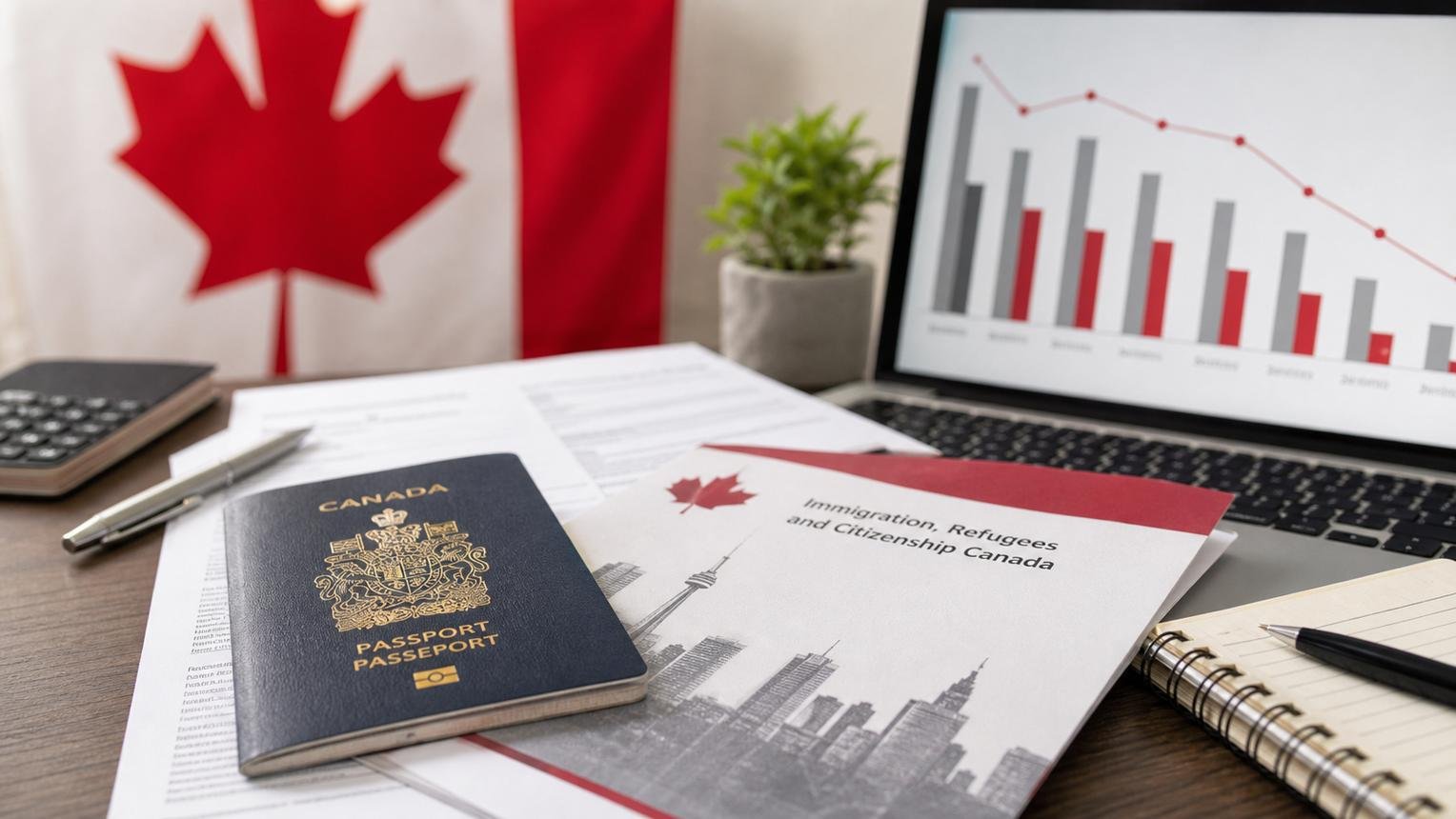
Canada Super Visa Application Checklist for Pakistani Parents: Documents, Forms, and Common Mistakes
Applying for a Canada Super Visa from Pakistan requires careful preparation of personal documents, family records, financial evidence, medical insurance, and other supporting information. Missing documents, unclear scans, or inconsistent details can delay the process or lead to an application being returned or refused.
The Canada Super Visa allows eligible parents and grandparents of Canadian citizens, permanent residents, and registered Indians to visit their family members for extended periods. Applicants must satisfy the relevant eligibility conditions and provide evidence that meets the requirements of Immigration, Refugees and Citizenship Canada (IRCC).
This guide provides a practical Canada Super Visa application checklist for Pakistani parents and grandparents. It explains which documents may be needed, what the host in Canada must prepare, how to organise application forms, and which common mistakes to avoid.
Important: Document requirements may vary depending on your circumstances and the instructions issued by IRCC. Always follow the personalised document checklist provided during your application.
[IMAGE PLACEMENT: Insert Inline Photo 1 — Pakistani parents and their adult child preparing application documents.]

1. Understand the Main Canada Super Visa Requirements
Before collecting documents, confirm that both the applicant and the host satisfy the relevant eligibility conditions.
The applicant must generally:
- Be the parent or grandparent of an eligible host in Canada.
- Apply from outside Canada.
- Meet the applicable immigration and admissibility requirements.
- Complete the required immigration medical examination.
- Provide proof of qualifying private medical insurance.
- Submit the supporting documents requested for the application.
The host must generally be the applicant’s biological or adopted child or grandchild, be at least 18 years old, live in Canada, hold an eligible Canadian status, meet the applicable minimum necessary income requirement, and provide a signed invitation letter.
A Super Visa is not the same as permanent residence. It is a temporary resident option for eligible parents and grandparents visiting family.
Official reference: Canada Super Visa eligibility requirements.
2. Passport and Personal Documents
The applicant’s passport and personal details form the foundation of the application.
Prepare the following as applicable:
Valid passport
Provide a clear copy of the passport identification page and any additional pages requested by the application checklist. Check the passport’s expiry date and ensure that the personal information is readable.
If the applicant has previous passports containing travel history, retain them and provide copies if requested or relevant to the application.
Photographs
Provide photographs if the personalised checklist or visa application instructions require them. Follow the applicable specifications rather than assuming that any passport-style photograph will be accepted.
Personal information
Ensure that the applicant’s name, date of birth, marital status, and other personal details are consistent across the application forms and supporting records.
If a name differs between documents because of marriage, spelling variations, or another legitimate reason, provide the appropriate supporting explanation or evidence when required.
Previous travel records
Previous passports, visas, entry stamps, and travel records may help explain the applicant’s travel history when relevant. Include them where requested or useful to substantiate the information supplied in the application.
3. Proof of Relationship to the Host in Canada
The applicant must demonstrate that they are the parent or grandparent of the child or grandchild inviting them to Canada.
IRCC identifies documents such as a copy of the host’s birth certificate or baptismal certificate, or another official document naming the applicant as the parent or grandparent, as potential evidence.
Depending on the family circumstances, relevant records may include:
- The host’s birth certificate identifying the parent.
- Official civil registration records.
- Relevant adoption documentation, where applicable.
- Other official records establishing the family relationship.
If the applicant is a grandparent, additional documents may be needed to establish the family link through the applicant’s child to the host.
For example, a grandparent applying to visit a Canadian grandchild may need evidence connecting the grandparent to the child’s parent and the parent to the host, depending on the available records and IRCC’s instructions.
Do not assume that a family photograph or informal statement will replace official relationship evidence.
Official reference: IRCC Super Visa forms and document requirements.
4. Host’s Canadian Status Documents
The child or grandchild inviting the applicant must provide evidence of eligible status in Canada.
Depending on the host’s status, acceptable evidence may include:
- A Canadian citizenship certificate or another accepted citizenship document.
- A Canadian birth certificate, where applicable.
- A valid Permanent Resident Card.
- Confirmation of Permanent Residence or another accepted permanent residence record.
- A Secure Certificate of Indian Status or Certificate of Indian Status, where applicable.
The host should check the official instructions to confirm which document applies to their particular status.
If the host’s spouse or common-law partner is acting as an eligible co-signer, their relevant status and supporting documents may also be required.
Ensure that scans are clear and that both sides of a document are included when the instructions require them.
5. Invitation Letter From the Child or Grandchild
The invitation letter is a central part of the Super Visa application. It should be written and signed by the eligible child or grandchild who is inviting the applicant.
The letter should explain the purpose of the visit and include the information required by IRCC.
Information to include
The invitation should address:
- The host’s full name and contact information.
- The host’s eligible status in Canada.
- The applicant’s name and relationship to the host.
- The purpose of the visit.
- The planned length of stay, where known.
- The intended accommodation arrangements.
- The host’s commitment to provide financial support for the duration of the visit.
- The list and number of people included in the host’s family-size calculation, with each person’s name and date of birth, as required.
The invitation must include the required evidence that the host meets the applicable minimum necessary income requirement.
Can the host’s spouse co-sign?
IRCC allows the host’s spouse or common-law partner to co-sign the invitation and provide income evidence when they meet the relevant eligibility conditions. Other relatives, such as the host’s sibling, cannot simply be added as co-signers under this rule.
Keep the letter consistent
The information in the invitation should agree with the application forms and other supporting evidence. For example, the proposed visit, host address, family relationship, and financial support arrangements should not contradict one another.
Official reference: IRCC guidance on the Super Visa invitation and supporting documents.
6. Proof of the Host’s Financial Support
The host must demonstrate that they meet the applicable minimum necessary income requirement. This assessment depends on the family-size calculation and the relevant income rules.
IRCC currently provides two routes for demonstrating the income requirement.
Option 1: Income from either of the previous two tax years
The host may demonstrate that their total qualifying income, including an eligible co-signer’s income where applicable, met or exceeded the required threshold in either of the two taxation years before the application.
A Canada Revenue Agency Notice of Assessment is the preferred evidence for this route.
Option 2: The alternative income calculation
Under the alternative route, the host’s qualifying income for the preceding year must reach at least 75% of the applicable minimum necessary income. The visiting parent or grandparent may contribute qualifying income to cover the remaining amount, subject to IRCC’s conditions and evidence requirements.
Applicants should check the latest official rules before using this option.
Supporting financial documents
Depending on the route used and the circumstances, relevant evidence may include:
- Canada Revenue Agency Notices of Assessment.
- T4 or T1 documents where accepted.
- Recent pay statements covering the required period.
- An employer letter confirming employment and salary.
- Bank statements showing qualifying income deposits.
- Pension statements.
- Rental income documentation, where applicable.
- Evidence of the visiting parent’s or grandparent’s qualifying income if using the alternative method.
A bank balance alone should not automatically be treated as proof that the host meets the income threshold. Follow IRCC’s instructions about which documents demonstrate qualifying income.
Calculate the correct family size
The family-size calculation can include the host, the host’s spouse or common-law partner, dependent children, the visiting parent or grandparent, and other Super Visa applicants the host will support, as specified in the official rules.
A mistake in the family-size count may result in using the wrong income threshold. Complete this calculation carefully before selecting the supporting documents.
Official reference: IRCC Super Visa financial support and income requirements.
7. Medical Insurance Documents
Super Visa applicants must provide proof of qualifying private medical insurance.
The policy must meet the current IRCC requirements, including:
- A minimum of CAD $100,000 in emergency medical coverage.
- Coverage for healthcare, hospitalization, and repatriation.
- Validity for at least one year from the date of entry.
- Issuance by an eligible Canadian insurance company or a qualifying foreign insurance company.
- Payment in full or through an eligible instalment arrangement with a deposit.
A quotation alone is not accepted as proof of insurance.
What to include
Keep the formal insurance policy certificate and proof of payment. Review the issuing insurer’s name, coverage limit, effective date, expiry date, and other required details.
Where applicable, foreign-issued policies must include the statement required by IRCC concerning issuance while the insurer was doing insurance business in Canada.
Before purchasing insurance, verify that the insurer and the policy meet the current official requirements.
Official reference: Super Visa insurance documentation.
[IMAGE PLACEMENT: Insert Inline Photo 2 — Passport and organised application documents.]
8. Proof of the Immigration Medical Examination
Super Visa applicants must undergo the required immigration medical examination with an approved panel physician.
Prepare the medical examination confirmation or proof requested by IRCC. If the examination has not yet been completed, follow the applicable instructions for arranging it.
A routine examination by a personal doctor does not automatically replace the immigration medical examination required by IRCC.
The clinic may provide instructions about how the results are submitted and which confirmation document the applicant should retain.
Official reference: IRCC medical examination requirements for temporary residents.
9. Application Forms and Online Submission
Super Visa applicants must use the appropriate online application process and provide the forms and information requested by their personalised checklist.
The exact forms required depend on the applicant’s circumstances. Avoid relying on a random list of form numbers from an old article, as form versions and application procedures may change.
How to prepare the forms
- Start through the official IRCC application instructions.
- Select the option for visiting a child or grandchild for more than six months under the Super Visa program.
- Answer the application questions accurately.
- Review the personalised document checklist generated by the system.
- Complete the required forms using the latest versions and instructions.
- Check all names, dates, addresses, and other information before submitting.
- Upload the required supporting documents in the appropriate sections.
- Pay the applicable fees and retain the receipt.
If a representative has formally been appointed to act on the applicant’s behalf, the relevant representative form may be required. Applicants do not have to hire a representative merely to apply.
Official reference: How to apply for a Canada Super Visa.
10. Translation Requirements for Documents From Pakistan
Documents issued in Urdu or another language that is not English or French generally need to be accompanied by an English or French translation.
IRCC sets conditions for translations, including who may translate documents and when an affidavit is required.
A certified translator must meet the applicable certification requirements. If a translation is completed by someone who is not a certified translator, IRCC’s rules may require an affidavit from the translator confirming their language ability and the accuracy of the translation.
The applicant, their parent, guardian, sibling, spouse or partner, grandparent, child, aunt or uncle, niece or nephew, or first cousin cannot act as the uncertified translator under the listed restrictions.
Check every translated document
Before submitting, confirm that:
- The original-language document is included.
- The translation is complete.
- Names, dates, stamps, and other details are represented accurately.
- The required translator credentials or affidavit are included.
- The document meets the instructions applicable to the type of translation.
Do not translate a document yourself and assume that it will automatically be accepted.
Official reference: IRCC Super Visa forms and document requirements.
11. Other Supporting Documents That May Be Relevant
Not every applicant needs exactly the same additional documents. Depending on the application and the instructions issued, supporting evidence may help clarify the applicant’s circumstances.
Examples can include:
- Documents showing the applicant’s employment, pension, or financial circumstances.
- Evidence of family ties in Pakistan.
- Information about the purpose and expected duration of the visit.
- Relevant previous travel records.
- Additional records requested by the responsible visa office.
- Other supporting documents identified in the personalised checklist.
These examples are not a universal mandatory list. Include documents that are relevant and requested or that appropriately support the information supplied in the application.
A large number of unrelated documents does not automatically make an application stronger. Clarity, consistency, and relevance are more useful than unnecessary paperwork.
12. Common Canada Super Visa Application Mistakes
Submitting unclear scans
IRCC warns that documents must be clear and easy to read. Poor-quality scans can result in the application being returned or take longer to process.
Use readable scans and ensure that important details are not cut off.
Providing inconsistent information
Check that the applicant’s name, date of birth, family relationship, and other details match across the passport, forms, and supporting records.
If a legitimate discrepancy exists, provide the appropriate explanation and evidence.
Missing host income evidence
The host must demonstrate that the relevant income requirement is met. An invitation letter without the required supporting financial evidence may be insufficient.
Using the wrong family-size calculation
Incorrectly counting household members can lead to the wrong income threshold being applied.
Buying unsuitable medical insurance
Check the insurer, coverage amount, policy duration, benefits, and payment evidence against the current IRCC requirements.
Forgetting the medical examination requirement
Applicants must provide the required proof of completing the immigration medical examination.
Omitting required translations
Documents that are not in English or French generally require an appropriate translation and any additional supporting material specified by IRCC.
Ignoring country-specific instructions
The responsible visa office may require additional documents. Check the current instructions applicable to the applicant’s country and circumstances.
Treating the checklist as a guarantee of approval
Even a complete application must satisfy the eligibility and admissibility requirements. A checklist helps organise documents; it cannot guarantee a positive decision.
13. Step-by-Step Final Review Before Submission
Before submitting the application, follow this review process:
Step 1: Confirm eligibility. Check that both the applicant and the host satisfy the relevant Super Visa requirements.
Step 2: Review the passport. Confirm that the passport details are accurate and that all requested pages are included.
Step 3: Verify the relationship. Ensure that the required official family records are provided.
Step 4: Review the invitation letter. Check the host’s status, financial support commitment, family-size information, and other required details.
Step 5: Verify income evidence. Confirm the applicable income route, threshold, and supporting documents.
Step 6: Check medical insurance. Review the insurer’s eligibility, policy duration, coverage, and payment evidence.
Step 7: Confirm the medical examination. Include the proof required by IRCC.
Step 8: Review forms and translations. Use the latest applicable forms and ensure all required translations are complete.
Step 9: Check the personalised checklist. Compare the uploaded documents against every item requested in the online application.
Step 10: Retain copies. Save the submitted forms, supporting documents, payment receipt, and application confirmation.
14. Frequently Asked Questions
What documents are required for a Canada Super Visa from Pakistan?
Common requirements include a passport, an invitation letter, proof of relationship, proof of the host’s eligible Canadian status, evidence of the host’s income, qualifying medical insurance, and proof of the required medical examination. The personalised checklist may request additional documents.
Is a bank statement enough to prove the host’s income?
Not necessarily. IRCC identifies the Notice of Assessment as the preferred evidence for the standard income route and lists alternative documents where permitted. Follow the official financial support instructions.
Does the applicant need a medical examination?
Yes. Super Visa applicants must complete the required immigration medical examination and provide the proof requested by IRCC.
Must the invitation letter include financial information?
Yes. The host’s invitation must include the required evidence that the host meets the applicable minimum necessary income requirement and the family-size information specified by IRCC.
Do Urdu documents need translation?
Documents that are not in English or French generally need an English or French translation, along with any additional documentation required under IRCC’s translation rules.
Can the host’s spouse help meet the income requirement?
An eligible spouse or common-law partner may co-sign the invitation and provide income evidence where permitted. The applicant should review the current official rules for the conditions that apply.
Can I submit documents that are not listed in the checklist?
Additional evidence may be relevant in some circumstances, but it should support the application and comply with IRCC’s instructions. Avoid uploading unrelated material that makes the application harder to review.
Does a complete checklist guarantee approval?
No. The checklist helps ensure that required documentation is organised, but IRCC assesses eligibility, admissibility, and the full application before making a decision.
Where can I find the official Super Visa forms and instructions?
Use the official Canada.ca Super Visa pages and follow the personalised document checklist generated during the application process.
Conclusion
Preparing a Canada Super Visa application from Pakistan requires careful coordination between the applicant and the host in Canada. Both should check the passport and personal details, family relationship records, invitation letter, income evidence, medical insurance, medical examination confirmation, forms, and translations before submission.
The most effective approach is to use IRCC’s current instructions rather than relying exclusively on old checklists or informal advice. Ensure that every document is readable, accurate, relevant, and submitted in the correct format.
For the final document list, consult the official IRCC pages and the personalised checklist provided through the application process.
Official Canadian Government Sources
- Super Visa forms and documents
- Super Visa financial support and income requirements
- Super Visa eligibility
- How to apply for a Super Visa
- Medical examination requirements
Disclaimer
This article is published by NewsGlobality.com for general informational and educational purposes only. NewsGlobality.com is an independent blog and is not affiliated with, endorsed by, or operated by the Government of Canada, Immigration, Refugees and Citizenship Canada (IRCC), or any visa application centre.
This article does not constitute legal or immigration advice. Requirements, application procedures, forms, and fees may change. Readers should verify current instructions through official Canadian government sources and consult a qualified professional if they need advice about their individual circumstances. No visa approval or immigration outcome is guaranteed.
1 thought on “Canada Super Visa application checklist for Pakistani Parents (2026)”