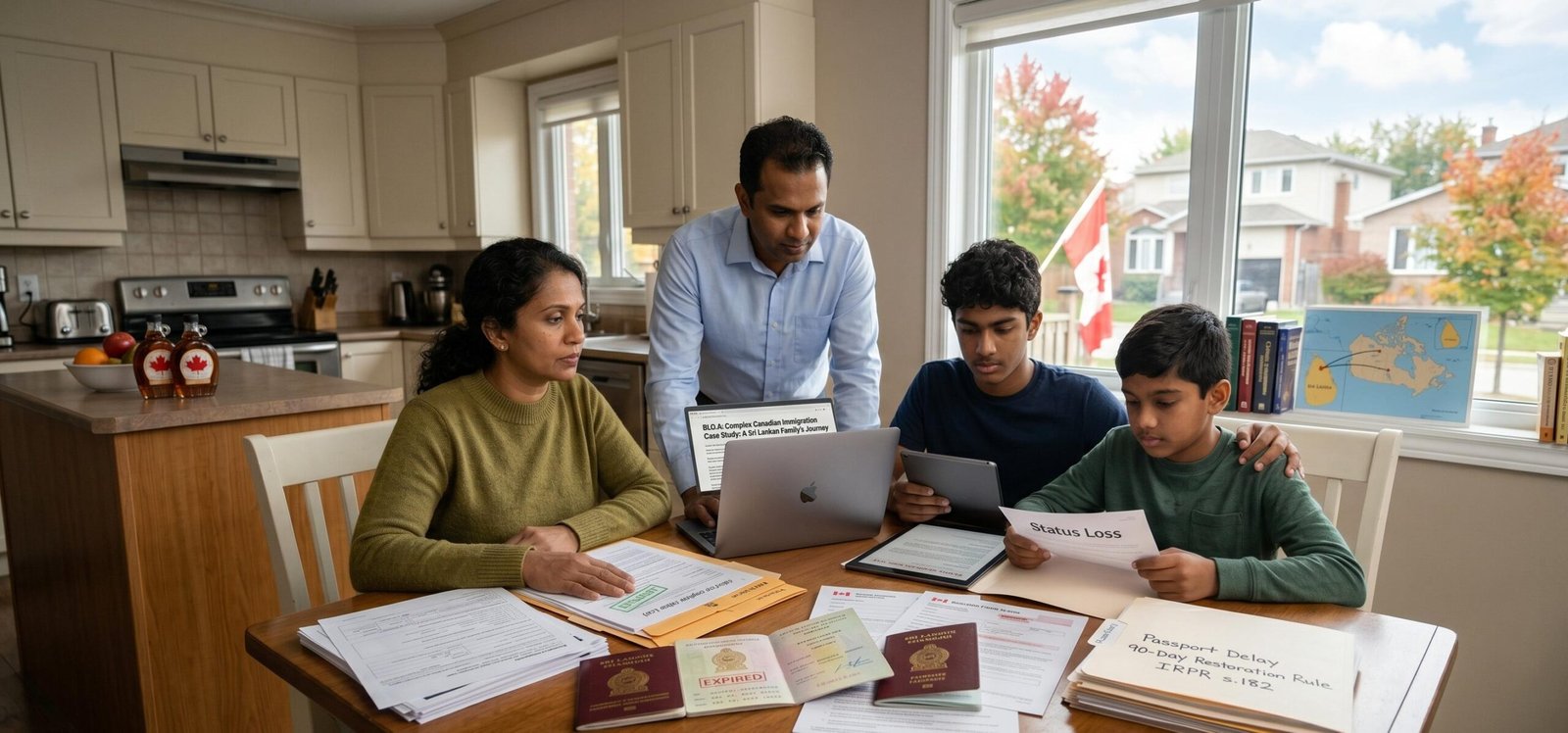
Family Sponsorship Refusal in Canada: Common Issues and What to Review
A Canada family sponsorship refusal can be a distressing development for families who are trying to reunite with relatives in Canada. Whether the application concerns a spouse, dependent child, parent or grandparent, a refusal may interrupt a lengthy immigration process and create uncertainty about the next available steps.
However, a refusal does not always mean that the family has no further options. Depending on the application category, the reason for refusal and the stage at which the decision was made, a sponsor may have an appeal right, an applicant may be able to submit a new application, or the decision may be eligible for judicial review before the Federal Court.
The first task is to understand precisely what IRCC refused. A refusal of the sponsor’s eligibility is not necessarily the same as a refusal of the sponsored relative’s permanent residence application. Similarly, a refused visitor visa or Super Visa is governed by different procedures from a refused family-class permanent residence application.
This guide explains the common reasons for a Canada family sponsorship refusal, the distinction between different refusal decisions, and the principal options families should examine before deciding what to do next. It is particularly relevant to families applying from Pakistan, although the immigration rules discussed apply more broadly.
1. Understanding a Family Sponsorship Refusal
Canadian family sponsorship involves two connected assessments:
- Whether the person in Canada is eligible to sponsor the relative.
- Whether the sponsored relative satisfies the requirements for permanent residence.
These assessments are related, but they are not identical.
For example, a Canadian permanent resident may submit a spousal sponsorship application. IRCC first assesses the sponsor’s eligibility and then assesses the spouse’s permanent residence application. A concern involving the sponsor’s eligibility may lead to a different procedural outcome from a concern involving the sponsored spouse’s admissibility or relationship evidence.
Refusal of the sponsor’s eligibility
A sponsor may be found ineligible because of issues such as:
- Not meeting the minimum age requirement.
- Not having the required Canadian citizenship or permanent resident status.
- Living outside Canada when the applicable rules do not permit sponsorship.
- Receiving social assistance for a reason other than disability, where this makes the person ineligible.
- Being in default of a previous sponsorship undertaking.
- Being in default of certain immigration loans or court-ordered payments.
- Being subject to an applicable sponsorship bar because of a criminal conviction or other legal restriction.
- Not meeting the relevant programme-specific financial requirements.
The consequences depend on the application category and the sponsor’s choices in the application process. IRCC’s instructions explain that, in certain spouse or partner applications, a person may choose whether to withdraw the application or continue processing even if they are found ineligible to sponsor.
Refusal of the sponsored relative’s permanent residence application
A sponsored relative may be refused even where the sponsor satisfies the sponsorship requirements.
For example, an applicant may be found inadmissible, may fail to establish a genuine qualifying relationship, or may not satisfy the requirements for a dependent child.
The refusal letter should identify the decision and the relevant reasons. The family should not assume that correcting the sponsor’s income or eligibility will resolve a separate concern about the applicant’s admissibility or relationship.
2. Common Reasons for Family Sponsorship Refusal
The reasons for refusal vary according to the type of relative being sponsored. The following are common issues that families should review.
A. Sponsor does not meet eligibility requirements
A sponsor must satisfy the applicable legal conditions before sponsoring a family member.
For spousal and dependent-child sponsorship, the sponsor generally needs to be at least 18 years old and must be a Canadian citizen, permanent resident or registered Indian who meets the relevant requirements.
A permanent resident generally must live in Canada to sponsor a relative. A Canadian citizen living outside Canada may be able to sponsor a spouse, partner or dependent child if they demonstrate an intention to reside in Canada when the sponsored relative becomes a permanent resident. Different rules apply to particular sponsorship categories.
A sponsor’s previous immigration or financial obligations may also affect eligibility.
What to review: Examine the refusal explanation against the sponsor’s status documents, residence history, financial obligations, previous undertakings and any relevant criminal or immigration records.
B. Relationship is not considered genuine
In a spousal sponsorship application, IRCC must be satisfied that the marriage or partnership is genuine and is not primarily an arrangement to obtain immigration status.
An application may face concerns where:
- The couple provides very limited evidence of their relationship.
- Their relationship history is unclear.
- Important dates differ between forms and supporting documents.
- Their statements about how they met or married are inconsistent.
- Communication records do not adequately explain a long-distance relationship.
- The circumstances of the marriage are not sufficiently explained.
- Important previous relationships or marriages have not been properly disclosed.
For Pakistani couples, documents such as a Nikah Nama, Marriage Registration Certificate and NADRA family records may help establish civil and family details. However, civil documents alone may not establish the genuineness of a relationship.
What to review: Compare the relationship history, forms, marriage documents, photographs, communication records, visits and other evidence. Explain any genuine gaps or unusual circumstances with accurate supporting information.
C. Incomplete or inconsistent documentation
A family sponsorship application may be delayed or refused where important documents are missing, incomplete, outdated or inconsistent.
Examples include:
- Missing civil-status certificates.
- Unclear passport copies.
- Missing translations.
- Inconsistent names or dates of birth.
- Missing police certificates where required.
- Unexplained gaps in personal history.
- Incomplete family information.
- Failure to provide documents requested by IRCC.
Applicants from Pakistan should pay particular attention to consistency between passports, CNIC or NICOP records, NADRA documents, marriage records and application forms.
What to review: Identify the exact document mentioned in the refusal letter. Determine whether the document was omitted, uploaded incorrectly, translated improperly or submitted but not recognized by the officer.
D. Dependent child does not meet the requirements
A dependent child’s eligibility is governed by specific immigration rules, including age and dependency conditions.
A child may face problems where:
- The child does not satisfy the applicable age requirements.
- Dependency conditions are not established.
- Required medical or background checks are incomplete.
- Custody arrangements are unclear.
- Required consent from another parent is missing.
- The child’s family relationship has not been adequately documented.
Where parents are separated or divorced, custody orders and travel or immigration consent documents may be particularly important.
What to review: Examine the child’s date of birth, dependency circumstances, custody documents, parental consent and all family information provided in the application.
E. Parents and grandparents sponsorship income concerns
The Parents and Grandparents Program has programme-specific financial requirements. A sponsor may face refusal if IRCC determines that the required income was not demonstrated for the applicable assessment period.
Potential issues include:
- Incorrect family-size calculations.
- Missing CRA Notices of Assessment.
- Incorrectly calculated income.
- Failure to include a co-signer’s relevant information.
- Missing information about previous sponsorship undertakings.
- Inadequate evidence to support the income figures.
The income rules and intake arrangements can change. Families should use the rules applicable to the original application and the relevant decision rather than automatically applying a later year’s thresholds.
IRB guidance explains that certain parents-and-grandparents sponsorship refusals based on income may be appealed. The appeal process can involve evidence about the sponsor’s income, family size and, where relevant, humanitarian and compassionate considerations.
F. Medical, criminal or security inadmissibility
A sponsored relative must satisfy the applicable admissibility requirements.
Potential concerns may involve:
- Medical inadmissibility.
- Criminal inadmissibility.
- Security grounds.
- Organized criminality.
- Violations of human or international rights.
- Misrepresentation or withholding material information.
The legal consequences differ according to the inadmissibility ground and the facts of the case.
A medical concern, for example, should not be treated as identical to a criminal inadmissibility finding. Applicants should carefully read the actual decision and obtain appropriate professional advice where necessary.
G. Failure to respond to an IRCC request
IRCC may request additional documents, updated information, medical examinations, police certificates or clarification.
If the applicant does not respond within the stated deadline, the officer may make a decision using the information already available.
A family should not assume that an application will remain open indefinitely because a document is difficult to obtain.

What to review: Check the request letter, submission deadline, account messages, email records, upload confirmations and any explanation previously sent to IRCC.
3. Understand Exactly What Was Refused
Before choosing an option, identify the type of decision.
| Type of decision | What it means |
|---|---|
| Sponsor eligibility refusal | IRCC is not satisfied that the person in Canada qualifies to sponsor under the applicable rules. |
| Sponsored person’s PR refusal | The relative seeking permanent residence has not satisfied one or more immigration requirements. |
| Temporary resident refusal | A visitor visa, Super Visa, study permit or work permit application has been refused. |
| Incomplete application returned | The application may not have passed the completeness check and may not have entered substantive processing. |
| Refusal following inadmissibility finding | IRCC has found a legal ground that prevents the applicant from obtaining the requested status. |
This distinction matters because the available remedies are not interchangeable.
For example, the Immigration Appeal Division (IAD) can hear certain sponsorship appeals involving refused family-class permanent residence visa applications. It does not hear ordinary appeals against visitor visa or Super Visa refusals.
4. What Should Families Do Immediately After a Refusal?
A family should avoid making an impulsive decision after receiving a refusal. Instead, it should preserve the decision documents and identify any legal deadlines.
Step 1: Read the complete refusal letter
Read every page of the letter and identify:
- The application category.
- The person whose application was refused.
- The decision date.
- The stated refusal reasons.
- Any references to statutory provisions.
- Any information about appeal rights.
- Any instructions or deadlines.
Do not rely only on a short status message in the online account. The full decision letter is more useful for understanding the actual concerns.
Step 2: Obtain and review officer decision notes where available
Decision notes can provide additional context about the officer’s assessment.
The family should compare the notes with the application that was actually submitted. This may help identify whether the refusal resulted from missing evidence, an inconsistency, an interpretation of the legal requirements or a concern about credibility.
Applicants should use the applicable IRCC process to request records where they are not already provided. Access-to-information requests may involve eligibility and consent requirements, particularly where the requester is seeking another person’s personal information.
Step 3: Identify the available legal route
Determine whether the case may involve:
- An appeal to the Immigration Appeal Division.
- A new application.
- A request asking IRCC to reconsider its decision.
- An application for leave and judicial review at the Federal Court.
These options have different legal requirements and deadlines. A reconsideration request is not a substitute for an appeal or judicial review where a formal deadline applies.
Step 4: Preserve all supporting documents
Keep copies of:
- The original application.
- All forms and supporting documents.
- IRCC correspondence.
- The refusal letter.
- Officer decision notes.
- Upload confirmations.
- Medical and police documents.
- Any additional evidence obtained after refusal.

A complete record is useful when deciding whether to appeal, reapply or seek judicial review.
5. Can a Family Sponsorship Refusal Be Appealed?
In certain circumstances, yes.
Under section 63(1) of Canada’s Immigration and Refugee Protection Act, a person who submitted an application to sponsor a foreign national as a member of the family class may appeal a decision not to issue that family member a permanent residence visa.
The sponsor, rather than the sponsored relative, normally files the sponsorship appeal.
Who can appeal?
Canadian citizens and permanent residents may have a right to appeal certain refusals involving sponsored close family members.
The precise availability of an appeal depends on the type of decision, the relationship and any statutory restrictions.
For example, a sponsor may have an appeal route where a sponsored family member’s permanent residence visa is refused. Certain Parents and Grandparents Program income-related decisions may also be appealable.
Who cannot appeal?
Section 64 of the Immigration and Refugee Protection Act restricts appeals in specified inadmissibility cases.
These restrictions include findings involving:
- Security grounds.
- Violations of human or international rights.
- Sanctions.
- Serious criminality.
- Organized criminality.
There is also a restriction for misrepresentation-based inadmissibility, with an exception under the legislation for a sponsored spouse, common-law partner or child.
The law should be checked against the exact refusal decision. It is unsafe to assume that every family sponsorship refusal carries an IAD appeal right.
What is the appeal deadline?
The Immigration Appeal Division states that the sponsor’s Notice of Appeal and required documents must be received within 30 days of receiving the decision refusing the permanent residence visa.
This is a strict and important deadline. A family should not wait for a lengthy reconsideration exchange before investigating whether an appeal must be filed.
What documents are required?
The IRB’s sponsorship appeal instructions identify documents such as:
- Completed Notice of Appeal — Sponsorship form.
- Copy of the IRCC refusal letter.
- Copy of the officer decision notes, if received.
- Additional supporting documents relevant to the appeal.
The sponsor should follow the current IAD filing instructions and retain proof of submission.
What happens during an appeal?
The IAD reviews the case under its legal authority. Depending on the matter, the appeal may involve written evidence, an alternative dispute resolution process or a hearing.
The sponsor may need to explain why the original decision was wrong or why humanitarian and compassionate considerations support allowing the appeal.
An appeal is not simply an opportunity to submit the same application again. It requires a clear response to the refusal grounds and relevant legal and factual evidence.
6. Can a Family Reapply After a Sponsorship Refusal?
A new application may be possible in some circumstances, but it is not automatically the best option.
Before submitting another application, the family should determine whether the refusal can be corrected and whether a new application would be legally and practically appropriate.
When reapplication may be worth considering
A new application may be considered where:
- The original application was refused because important evidence was missing.
- The sponsor has since become eligible.
- The applicant can provide additional relationship evidence.
- A dependent child’s circumstances or supporting documents have changed.
- Financial documentation can now properly establish the applicable requirements.
- A previous inconsistency can be explained with reliable evidence.
Why submitting the same application again can be risky
If the family submits substantially the same evidence without addressing the refusal reasons, the next application may face the same concerns.
For example, a spouse whose relationship evidence was considered insufficient should not simply upload the same photographs and marriage certificate again. The new application should address the officer’s actual concerns with relevant, genuine and well-organized evidence.
Similarly, a sponsor whose eligibility was refused should establish that the relevant legal problem has been resolved before submitting another application.
Does reapplying cancel an appeal deadline?
No. Submitting a new application does not automatically preserve or extend an existing appeal or judicial review deadline.
A family should assess its legal options before allowing a deadline to expire.
7. Can You Request Reconsideration of an IRCC Refusal?
A reconsideration request is a written request asking IRCC to review a decision again.
It may be appropriate where the family believes that the decision involved a significant factual error, an overlooked document or another important issue that warrants the officer’s attention.
For example, an applicant may believe that an officer overlooked a document that was properly uploaded before the deadline. The family may explain the issue and provide evidence showing when and how the document was submitted.
However, reconsideration is discretionary. It is not a formal appeal and does not guarantee that IRCC will reopen the file or change the outcome.
What should a reconsideration request contain?
A request should be concise and evidence-based. It may include:
- Applicant’s name and identifying application details.
- Date of the refusal.
- Exact issue the family believes was overlooked or misunderstood.
- Relevant supporting documents.
- Proof that the information was submitted or available when required, if applicable.
- A clear explanation of the requested action.
A reconsideration request should not simply express disappointment or repeat the original application narrative.
Important: A reconsideration request does not suspend or extend the deadline for an appeal or judicial review. Families should obtain legal advice promptly if a formal deadline may apply.
8. What Is Judicial Review in a Family Sponsorship Case?
Judicial review is a legal process through which the Federal Court may examine an immigration decision.
It is not a complete re-hearing of the immigration application, and the Court does not simply replace the immigration officer’s decision with its preferred outcome.
A judicial review may examine whether the decision was legally reasonable and whether the required legal procedures were followed.
Potential issues may include:
- A significant legal error.
- An unreasonable assessment of important evidence.
- A failure to consider relevant information.
- A procedural fairness problem.
- A decision that does not adequately address the central issues in the case.
The exact grounds depend on the decision and the administrative record.
Judicial review deadlines
Under section 72 of the Immigration and Refugee Protection Act, an application for leave and judicial review must generally be filed and served within:
- 15 days for a matter arising in Canada.
- 60 days for a matter arising outside Canada.
The calculation depends on where the matter arose and when the applicant was notified of or became aware of it. The Federal Court may extend time in special circumstances, but an extension should never be assumed.
A person must generally exhaust any available statutory appeal before applying for judicial review.
Does the Federal Court automatically approve the sponsorship?
No. The Court first considers whether to grant leave. If leave is granted, the judicial review proceeds.
If the Court finds a reviewable error, the usual remedy may be to set aside the decision and return the matter for redetermination. This does not necessarily mean the sponsorship will be approved.
Because Federal Court proceedings involve strict procedural rules, legal representation from a qualified Canadian immigration lawyer is strongly advisable.

9. What If the Refusal Involves Misrepresentation?
Misrepresentation is a serious immigration matter.
Section 40 of the Immigration and Refugee Protection Act addresses directly or indirectly misrepresenting or withholding material facts relating to a relevant matter where the conduct induces or could induce an error in the administration of the Act.
Examples may include:
- Providing false employment information.
- Submitting altered financial records.
- Concealing a previous marriage.
- Failing to disclose a material family relationship.
- Providing inaccurate information about travel or immigration history.
- Submitting documents that are not genuine.
Under the legislation, a person found inadmissible for misrepresentation is generally inadmissible for five years following the relevant statutory starting point. The precise consequences depend on whether the determination was made inside or outside Canada and the legal circumstances.
Not every mistake is necessarily misrepresentation. A genuine clerical error or misunderstanding must be assessed in context. Nevertheless, an applicant should never ignore a misrepresentation allegation.
If IRCC sends a procedural fairness letter raising concerns about possible misrepresentation, the applicant should respond carefully, truthfully and within the stated deadline. This is an area where professional legal advice is particularly important.
10. What If a Super Visa or Visitor Visa Is Refused?
A Super Visa refusal is different from a family-class permanent residence sponsorship refusal.
A Super Visa is a temporary resident visa. It does not create the same sponsorship appeal rights as a refused family-class permanent residence visa.
The Immigration Appeal Division’s sponsorship appeal process does not allow an appeal against the refusal of a temporary resident visa, including a visitor visa, study permit or work permit.
A refused Super Visa applicant may consider:
- Reviewing the refusal letter and decision notes.
- Correcting the issues identified by the officer.
- Submitting a new application where appropriate.
- Requesting reconsideration in suitable circumstances.
- Seeking judicial review if there may be a reviewable legal or procedural error.
A new Super Visa application should address the actual concerns, such as the host’s income, qualifying medical insurance, purpose of travel, family circumstances or the applicant’s temporary-resident intentions.
The fact that a Canadian child or grandchild is willing to host a parent does not automatically establish eligibility for a Super Visa.
11. Special Considerations for Pakistani Families
Applicants from Pakistan may need to review civil records, family documents and translations carefully after a refusal.
Marriage and relationship records
For spousal sponsorship, examine the consistency of:
- Nikah Nama.
- Marriage Registration Certificate.
- NADRA Family Registration Certificate.
- CNIC or NICOP details.
- Passports.
- Previous marriage and divorce records, where applicable.
If names or dates differ between records, provide a truthful explanation supported by official documents where possible.
Police certificates
Check whether the correct police certificate was provided for the applicant’s residence history and the applicable IRCC instructions.
A police certificate that does not cover the required period or jurisdiction may create an issue.
Urdu translations
Documents in Urdu generally require translations that meet IRCC’s requirements.
A translation should be complete and accurate. Applicants should not assume that an informal translation prepared by a relative will satisfy the applicable rules.
Relationship evidence
For a spouse applying from Pakistan, relationship evidence may include:
- Wedding and family photographs.
- Communication records.
- Travel and visit records.
- Evidence of shared financial responsibilities.
- Family involvement.
- A clear relationship timeline.
- Explanations for periods of separation.
The evidence should be genuine and consistent with the information supplied in the forms.
Parents and grandparents applications
For parents-and-grandparents sponsorship, review the income calculation, family size, CRA Notices of Assessment, co-signer details and the relevant programme rules.
Where the refusal concerns a Super Visa rather than permanent residence sponsorship, review the separate temporary-resident requirements and do not assume that an IAD sponsorship appeal is available.
12. How to Avoid Common Mistakes After Refusal
Families should avoid the following errors:
- Submitting another application without reviewing the refusal: This can reproduce the original weaknesses.
- Ignoring appeal deadlines: A reconsideration request does not automatically preserve the right to appeal or seek judicial review.
- Using inaccurate or altered documents: This may create serious misrepresentation concerns.
- Assuming every refusal can be appealed: Appeal rights depend on the decision and statutory restrictions.
- Confusing temporary and permanent residence applications: Super Visa and family-class PR refusals have different procedures.
- Relying on outdated immigration information: Use the rules applicable to the application and the current official guidance.
- Failing to explain inconsistencies: Differences in names, dates or family details should be addressed transparently.
- Missing IRCC correspondence: Additional document requests and procedural fairness letters can carry strict response deadlines.
- Assuming a new application guarantees approval: Every application is assessed on its own evidence and applicable requirements.
- Treating an agent’s assurance as a legal decision: Verify advice and representation credentials before paying for services.
13. When Should You Seek Professional Legal Assistance?
Some refusals involve straightforward documentary problems, while others involve complex legal questions.
Professional advice from an authorized Canadian immigration lawyer or other authorized representative may be especially important where:
- An appeal deadline is approaching.
- The refusal involves misrepresentation.
- The applicant has been found criminally or medically inadmissible.
- IRCC has issued a procedural fairness letter.
- A dependent child’s eligibility is disputed.
- The sponsor’s eligibility is complicated by previous undertakings or legal restrictions.
- The case may require Federal Court judicial review.
- The refusal involves serious factual or procedural concerns.
A representative should explain the available legal routes, relevant deadlines, likely costs and limitations. No professional can guarantee that an appeal, reconsideration request or new application will succeed.
14. Frequently Asked Questions
1. Can I reapply after a Canadian family sponsorship refusal?
A new application may be possible, depending on the refusal reason and the relevant legal requirements. The family should correct the issues identified in the refusal before submitting another application.
2. Can a sponsor appeal a spousal sponsorship refusal?
A sponsor may have a right to appeal certain refusals of a sponsored family member’s permanent residence visa to the Immigration Appeal Division. However, statutory exceptions apply, and the exact type of decision must be examined.
3. How long do I have to appeal a family sponsorship refusal?
The IRB states that the Notice of Appeal and required documents must generally be received within 30 days of receiving the decision refusing the permanent residence visa.
4. Can parents’ sponsorship applications be appealed if the sponsor does not meet the income requirement?
Certain parents-and-grandparents sponsorship refusals based on income may be appealed to the IAD. The evidence and possible grounds depend on the case. Quebec residents are subject to a specific restriction on income-based appeals, although humanitarian and compassionate grounds may be considered.
5. Can I appeal a Super Visa refusal?
No ordinary sponsorship appeal is available through the IAD for a refused Super Visa because it is a temporary resident visa. Depending on the circumstances, the applicant may consider reapplying, requesting reconsideration or seeking judicial review.
6. What is the difference between reconsideration and judicial review?
A reconsideration request asks IRCC to review its own decision. Judicial review is a court process in which the Federal Court examines the legality and reasonableness of the decision and the fairness of the process.
7. What is the deadline for Federal Court judicial review?
The general statutory period is 15 days for a matter arising in Canada and 60 days for a matter arising outside Canada. The calculation depends on the legal circumstances and when the applicant was notified of or became aware of the matter.
8. Does requesting reconsideration extend the appeal deadline?
No. A reconsideration request does not automatically pause, extend or replace a statutory appeal or judicial review deadline.
9. Can a family sponsorship application be refused because of missing documents?
Yes. Missing, incomplete or inconsistent documents can affect an application. The family should identify the specific missing evidence and review the applicable checklist and IRCC correspondence.
10. Does a sponsorship refusal mean the family member can never immigrate to Canada?
Not necessarily. The available options depend on the refusal grounds, inadmissibility findings, appeal rights and whether the family can satisfy the requirements in a future application. Some legal restrictions can be serious and may prevent reapplication for a specified period.
Conclusion
A Canada family sponsorship refusal should be examined carefully before a family decides to reapply, request reconsideration or pursue an appeal. The first priority is to identify whether IRCC refused the sponsor’s eligibility, the sponsored relative’s permanent residence application or a separate temporary resident application.
Certain family-class permanent residence refusals may carry an appeal right before the Immigration Appeal Division, while temporary visa refusals do not qualify for that sponsorship appeal process. Judicial review may be available in appropriate cases, but it involves strict filing periods and a distinct legal test.
For families applying from Pakistan, careful examination of marriage records, NADRA documents, police certificates, translations, income evidence and relationship records may help identify the source of the problem.
The most important principle is to respond to the actual refusal reasons rather than submitting another application without meaningful changes. Families should verify the relevant rules through official Canadian government sources and obtain qualified professional advice where legal deadlines or complex admissibility issues are involved.
Independent information disclaimer: NewsGlobality.com is an independent informational blog. It is not affiliated with, endorsed by or operated by Immigration, Refugees and Citizenship Canada (IRCC), the Government of Canada, the Canada Border Services Agency (CBSA), the Immigration and Refugee Board of Canada (IRB), the Federal Court of Canada or any visa application centre. This article is provided for general educational purposes only and does not constitute legal, immigration or professional advice. Immigration laws, appeal procedures and application requirements may change. Readers should verify current requirements through official government sources or consult an authorized Canadian immigration professional before making decisions.
1 thought on “Canada Family Sponsorship Refusal: Reasons and Next Steps (2026)”