
Canada Super Visa Rules for Pakistani Parents in 2026: Multiple Entries, Visa Validity, and Length of Stay
Canada Super Visa rules 2026 are important for Pakistani parents and grandparents who intend to visit their children or grandchildren living in Canada. The programme provides an opportunity to make repeated family visits and, for eligible applicants, remain in Canada for an extended period during each visit.
However, several aspects of the Super Visa are frequently misunderstood. A visa that is valid for several years does not automatically permit a person to remain in Canada continuously for the same period. Similarly, permission for multiple entries does not mean that the holder can disregard the conditions of temporary residence.
This guide explains the principal Canada Super Visa rules 2026, including multiple-entry permissions, visa validity, the five-year stay provision, passport requirements and the responsibilities of Pakistani applicants and their Canadian hosts.
1. What Is the Canada Super Visa?
The Canada Super Visa is a special type of temporary resident visa designed for parents and grandparents of Canadian citizens, permanent residents and certain registered Indians under the Indian Act.
It allows eligible family members to visit Canada for extended periods. Unlike an ordinary visitor visa, which generally permits a stay of up to six months unless an officer authorizes otherwise, the Super Visa provides eligible holders with the possibility of staying for up to five years at a time.
The programme also provides multiple-entry travel privileges, subject to the visa’s validity and the traveller’s continued eligibility.
The Super Visa is nevertheless a temporary immigration document. It does not provide permanent residence, Canadian citizenship or an automatic right to settle permanently in Canada.
2. How Long Is a Canada Super Visa Valid in 2026?
A Super Visa can provide multiple-entry travel privileges for a period of up to ten years. Nevertheless, applicants should not assume that every approved application will receive the full ten-year validity period.
The actual expiry date can depend on several factors, including:
- The expiry date of the applicant’s passport.
- The validity of the applicant’s biometrics.
- The immigration officer’s assessment.
- The applicant’s individual circumstances and eligibility.
For example, a Pakistani parent whose passport has a considerably shorter remaining validity period may receive a visa that expires earlier than ten years.
The ten-year period is therefore a maximum possible validity period, not a guaranteed duration for every applicant.
Applicants should examine the visa counterfoil placed in their passport and confirm its expiry date before arranging international travel.
3. Does the Canada Super Visa Allow Multiple Entries?
Yes. The Super Visa is designed to facilitate multiple visits to Canada while the visa remains valid.
This means that an eligible holder may travel to Canada, leave the country and return again without applying for an entirely new Super Visa each time, provided that the visa remains valid and the traveller continues to satisfy the applicable entry requirements.
For example, a Pakistani mother might:
- Travel from Pakistan to Canada to visit her daughter.
- Remain in Canada for an authorized period.
- Return to Pakistan to attend to personal or family responsibilities.
- Travel to Canada again while her Super Visa remains valid.
This flexibility is particularly useful for families who divide their time between Pakistan and Canada.
However, multiple-entry permission should not be confused with unrestricted admission. A valid visa allows the holder to travel to a Canadian port of entry and request admission. The final decision remains with the border services officer.
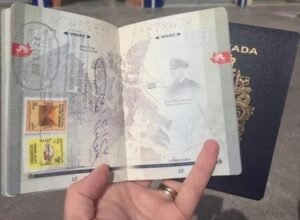
4. How Long Can Pakistani Parents Stay in Canada on Each Entry?
One of the most significant changes to the Super Visa programme concerns the length of stay permitted during an individual visit.
Under the rules applicable to Super Visa applications submitted on or after June 22, 2023, eligible holders can stay in Canada for up to five years at a time.
This provision allows parents and grandparents to spend longer periods with their Canadian family members without having to leave Canada merely because the ordinary six-month visitor period has elapsed.
Nevertheless, applicants should understand the distinction between eligibility for a five-year stay and the actual period authorized in their individual circumstances.
The date of application and, in certain cases, the date of entry can affect the applicable rules. Travellers should check the official IRCC guidance for their particular situation.
Applications submitted before June 22, 2023
Different transitional rules may apply to people who applied before June 22, 2023.
For example, where a holder entered Canada before that date, the authorized period granted by the border officer generally determines how long the person may remain. Certain eligible individuals may be able to extend their stay or leave and re-enter, subject to the applicable requirements.
People with older Super Visas should not automatically assume that the newer five-year provision applies to every historical entry.
5. Is a Ten-Year Super Visa the Same as Permission to Stay for Ten Years?
No. This is among the most important distinctions under the Canada Super Visa rules 2026.
Visa validity and authorized length of stay are separate immigration concepts.
Visa validity refers to the period during which the holder may use the visa to travel to a Canadian port of entry and request admission.
Authorized stay refers to the period the person is permitted to remain in Canada following an individual entry.
Consider the following example:
A Pakistani father receives a Super Visa that remains valid until 2034. He travels to Canada in 2026 and is admitted for an authorized stay of up to five years under the applicable rules.
The visa’s expiry date in 2034 does not mean that he can remain in Canada continuously until 2034. His authorized stay must be assessed separately.
If he leaves Canada and later returns, he must still have a valid travel document and satisfy the requirements for admission. The applicable period of stay is considered in connection with that entry.
6. How Does Passport Expiry Affect Super Visa Validity?
A valid passport is essential for international travel and immigration processing.
If a Pakistani applicant’s passport is approaching its expiry date, the Super Visa may be issued for a shorter period than the maximum possible validity.
For this reason, applicants should examine their passport’s remaining validity before submitting an application.
They should also consider the practical consequences of travelling with a passport that may expire during an extended visit.
A parent planning a lengthy stay should maintain a valid passport and contact the appropriate authorities about renewal procedures where necessary.
A new passport does not automatically extend the validity of an existing visa. Travellers should follow official instructions concerning the use of an existing valid visa alongside a replacement passport.
7. Can Biometrics Limit the Validity of a Super Visa?
Yes. Biometrics can affect the maximum period for which a temporary resident visa may be issued.
IRCC generally considers the validity of previously submitted fingerprints and photographs when assessing temporary resident applications.
If an applicant has already provided biometrics, those records may remain valid for ten years. However, IRCC cannot issue a visa beyond the applicable biometric validity period.
Applicants should therefore check their biometric records and follow any instructions issued by IRCC during the application process.
A person who wants a longer visa validity period may need to provide biometrics again where permitted and appropriate.
8. Can Parents Leave Canada and Return During the Validity Period?
A multiple-entry Super Visa is intended to make repeated travel possible. Therefore, parents and grandparents may leave Canada and return while their visa remains valid.
However, each journey should be planned carefully.
Before returning to Canada, the traveller should confirm:
- The Super Visa has not expired.
- The passport is valid.
- The required medical insurance arrangements remain compliant.
- The traveller continues to satisfy the relevant immigration conditions.
- The purpose of travel is consistent with the temporary nature of the programme.
A previous admission does not guarantee admission on a subsequent journey. Canadian border officials retain authority to assess each traveller’s admissibility and circumstances.
9. What Documents Should Pakistani Parents Carry When Travelling?
Although the visa is placed in the passport, travellers should carry relevant supporting documents when travelling to Canada.
A practical document folder may contain:
- Valid Pakistani passport containing the Super Visa.
- Evidence of valid and qualifying medical insurance.
- Invitation letter from the Canadian child or grandchild.
- Evidence of the host’s Canadian citizenship or permanent residence, where relevant.
- Documents establishing the family relationship.
- The Canadian host’s contact details and residential address.
- Supporting financial documents, where appropriate.
- Copies of relevant application documents.
Keeping these records accessible can help answer questions from border officials.
Travellers should avoid placing essential documents only in checked baggage.
10. Must Super Visa Holders Maintain Medical Insurance?
Yes. Medical insurance is a central requirement of the Super Visa programme.
Applicants must provide evidence of qualifying private medical insurance that meets the applicable IRCC requirements. The policy must generally:
- Provide a minimum of CAD $100,000 in coverage.
- Cover healthcare, hospitalisation and repatriation.
- Remain valid for at least one year from the date of entry.
- Be issued by a qualifying Canadian insurance provider or an eligible foreign insurer approved under the applicable rules.
- Satisfy the payment requirements established by IRCC.
The insurance requirement should not be treated as a formality. Medical treatment in Canada can be expensive, and visitors are not automatically entitled to the same publicly funded healthcare coverage as Canadian residents.
Parents should review their policy conditions, exclusions, renewal arrangements and coverage dates before travelling.
11. What Happens If a Super Visa Expires While the Parent Is in Canada?
The expiry date of a visa and the expiry of authorized visitor status are not necessarily the same thing.
A person may be inside Canada while holding a visa that has expired, provided that the person’s authorized stay has not expired and all applicable conditions continue to be satisfied.
However, an expired visa generally cannot be used as a valid travel document for a new journey to Canada.
If a parent intends to leave Canada and return after the visa expiry date, a new visa may be necessary.
If the parent wishes to remain in Canada beyond the authorized stay, an application to extend the stay may be required before the existing status expires.
A visitor record may document an extended stay, but it is not itself a new entry visa and does not automatically authorize re-entry into Canada.
12. Can a Super Visa Holder Stay Permanently in Canada?
No. The Super Visa is not a permanent residence programme.
It is designed to facilitate temporary family visits. Applicants must continue to satisfy the conditions of temporary residence, including demonstrating that they will leave Canada when their authorized stay ends.
A parent who wishes to explore permanent residence options must consider the separate immigration programmes and eligibility requirements that may apply.
The Super Visa should not be presented as a substitute for permanent residence sponsorship or as a guaranteed pathway to Canadian citizenship.
13. Common Misunderstandings About Canada Super Visa Rules 2026
Several misconceptions can create problems for applicants and travellers.
Misunderstanding 1: Every Super Visa is valid for exactly ten years.
Incorrect. Ten years is the maximum possible validity period. Passport validity, biometrics and individual circumstances may result in a shorter period.
Misunderstanding 2: A ten-year visa permits a continuous ten-year stay.
Incorrect. Visa validity and authorized stay are different. Eligible holders may generally stay for up to five years at a time under the applicable post-June 22, 2023 rules.
Misunderstanding 3: Multiple entry guarantees admission every time.
Incorrect. A multiple-entry visa permits repeated travel while valid, but admission remains subject to examination by Canadian border officials.
Misunderstanding 4: Medical insurance is required only when applying.
Incorrect. Super Visa holders must maintain qualifying insurance in accordance with the applicable requirements during their stay.
Misunderstanding 5: An expired visa automatically means the person has lost legal status inside Canada.
Incorrect. Visa validity and authorized stay are separate. The traveller must examine the status and expiry conditions applicable to their particular circumstances.
14. How Pakistani Families Can Prepare for Super Visa Travel
Families can reduce avoidable complications by reviewing their documents and travel arrangements before departure.
The Canadian host should ensure that the parent or grandparent has the required insurance and supporting documentation. The traveller should check the passport and visa expiry dates and understand the conditions attached to the visit.
It is also sensible to keep copies of important documents in a secure location.
Most importantly, families should avoid making travel decisions solely on the basis of the visa’s expiry date. The authorized period of stay, insurance conditions and any instructions from Canadian immigration authorities must also be considered.
Frequently Asked Questions
1. How many years is a Canada Super Visa valid in 2026?
A Super Visa can provide multiple-entry travel privileges for up to ten years. The actual validity period depends on the passport, biometrics and the applicant’s circumstances.
2. Can Pakistani parents enter Canada more than once with a Super Visa?
Yes. The Super Visa is a multiple-entry temporary resident visa. Holders may make repeated journeys while the visa remains valid, subject to the applicable entry requirements.
3. Can parents stay in Canada for five years on a Super Visa?
Eligible holders under the rules for applications submitted on or after June 22, 2023 can generally stay for up to five years at a time. Individual circumstances and applicable transitional rules should be checked.
4. Does a ten-year Super Visa mean parents can live in Canada for ten years?
No. The ten-year period concerns potential visa validity, not continuous permission to remain in Canada. The authorized stay for an individual entry is a separate matter.
5. Can a parent return to Canada after visiting Pakistan?
Yes, provided the Super Visa remains valid, the passport is valid and the traveller continues to meet the applicable entry requirements.
6. What happens if a Pakistani parent’s passport expires before the Super Visa?
The visa may have been issued for a shorter period because of passport validity. The parent should renew the passport as appropriate and follow official guidance about travelling with an existing visa and a new passport.
7. Can a Super Visa holder extend their stay from inside Canada?
An eligible holder may apply to extend their temporary stay before their authorized status expires. Approval is not automatic, and the application must meet the applicable requirements.
8. Is the Canada Super Visa a permanent residence visa?
No. It is a temporary resident visa intended for extended family visits. It does not independently grant permanent residence or citizenship.
Conclusion
The Canada Super Visa rules 2026 provide Pakistani parents and grandparents with an opportunity to visit their Canadian families through a multiple-entry arrangement and, where eligible, remain in Canada for up to five years at a time.
Nevertheless, families must distinguish between the visa’s validity period and the authorized duration of each stay. Passport expiry, biometrics, insurance requirements and border admission decisions can all affect travel arrangements.
Before applying or travelling, Pakistani applicants should consult the latest official IRCC information and carefully review the conditions attached to their individual documents.
Independent information disclaimer: NewsGlobality.com is an independent informational blog. It is not affiliated with Immigration, Refugees and Citizenship Canada (IRCC), the Government of Canada, the Canada Border Services Agency (CBSA), visa application centres or any immigration consultancy. This article is for general educational purposes only and does not constitute legal or immigration advice. Immigration requirements can change, and readers should verify current rules through official Canadian government sources or consult an appropriately authorised professional for advice about their individual circumstances.
1 thought on “Canada Super Visa Rules 2026: Validity, Entries & Stay”